Municipal wastewater treatment plants in India shoulder the critical responsibility of managing the vast volumes of sewage generated every day. With cities expanding and water demand rising, the role of municipal treatment plants goes far beyond disposal. The treatment plants are essential for safeguarding clean water resources, preventing disease outbreaks, and even enabling water reuse for agriculture and industry.
What Types of Contaminants are found in Municipal Wastewater?
Municipal wastewater is a complex mixture of physical, chemical, and biological contaminants. It originates from households, commercial establishments, institutions, and stormwater runoff. The most common contaminants include:
- • Suspended solids – particles such as silt, grit, food waste, and other debris that clog systems and harm aquatic life.
-
- • Organic matter – primarily human waste and food residues, which decompose to reduce dissolved oxygen in water, leading to foul odors and aquatic ecosystem stress.
-
- • Pathogens – bacteria, viruses, and parasites that pose serious risks to public health if discharged untreated.
-
- • Nutrients – nitrogen and phosphorus compounds from detergents, fertilizers, and sewage, which can trigger algal blooms and eutrophication in water bodies.
-
- • Chemicals and heavy metals – household cleaning agents, pharmaceuticals, industrial discharges, and stormwater runoff may introduce toxic elements such as lead, mercury, and arsenic.
-
- • Oil & grease – from kitchens and commercial outlets, which interfere with biological treatment processes and form scum layers in water bodies.
-
Together, these contaminants make untreated municipal wastewater a direct threat to human health, biodiversity, and the long-term sustainability of freshwater resources.
Municipal wastewater treatment follows a step-by-step process where each level of treatment plays a complementary role in removing contaminants. These levels are – Primary, Secondary, and Tertiary treatments.
Municipal wastewater treatment typically involves three complementary stages: Primary, Secondary, and Tertiary.
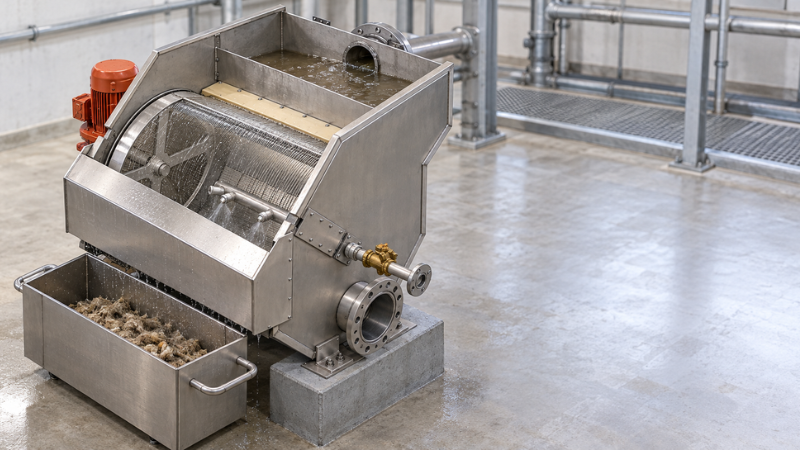
- • Primary Treatment – is the first step, where physical processes like screening and sedimentation remove large solids, grit, oils, and floating matter. While effective at reducing suspended solids and some organic load, it is ineffective against dissolved pollutants and pathogens.
-
- • Secondary Treatment – building on the primary stage, this step uses biological processes such as activated sludge, biofilm reactors, or sequencing batch reactors (SBRs) to break down organic matter and significantly reduce biochemical oxygen demand (BOD) and pathogens.
-
- • Tertiary (or Advanced) Treatment – The final stage, designed to remove residual nutrients, pathogens, trace organics, and heavy metals, using processes such as filtration, membrane systems, UV disinfection, and advanced oxidation. This level ensures the treated water meets safety standards and can be safely discharged or reused.
-
When integrated effectively, these three stages transform raw sewage into treated water that is safe for the environment and can be reused in agriculture, landscaping, industry, and even non-potable urban applications.
Municipalities across India face a critical juncture in wastewater management. Conventional plants—built primarily for treatment and discharge—are no longer adequate to meet today’s demands. Rapid urban growth, climate variability, and intensifying freshwater scarcity make it essential for municipalities to move beyond basic treatment. The future lies in advanced, resource-efficient systems that not only treat wastewater but also recover water, energy, and nutrients for reuse.
Why Municipalities should Upgrade to Advanced Wastewater Treatment Systems
- • Public health protection: advanced disinfection technologies ensure pathogens are removed more effectively, reducing the risk of waterborne diseases in densely populated urban areas.
-
- • Environmental sustainability: nutrient removal prevents algal blooms and oxygen depletion in rivers and lakes, preserving aquatic ecosystems.
-
- • Water reuse potential: treated wastewater can substitute freshwater for agriculture, landscaping, and industrial operations, easing pressure on already stressed water supplies.
-
- • Energy and resource recovery: modern plants can capture biogas from sludge, recover nutrients like phosphorus, and even integrate renewable energy, turning wastewater into a resource.
-
- • Economic savings: resource recovery lowers operational costs over time and creates opportunities for revenue generation.
-
- • Regulatory compliance: advanced systems help municipalities meet stricter environmental standards and avoid penalties.
-
- • Community stewardship: advanced treatment reflects a forward-looking approach to safeguarding citizens’ wellbeing and preserving resources for future generations.
-
By upgrading to advanced technologies such as membrane bioreactors (MBR), moving bed biofilm reactors (MBBR), and decentralized modular plants, municipalities can shift from crisis management to sustainable water stewardship, transforming wastewater from a liability into a critical resource.
Frequently Asked Questions(FAQs)
Q1. What potential does treated wastewater have for reuse in urban India?
A: Once properly treated, wastewater can be reused for applications like agriculture, landscaping, industrial processes, cooling systems, and other non-potable urban needs, helping to relieve pressure on strained freshwater resources.
Q2. What benefits do advanced wastewater treatment systems provide to municipalities?
A: They offer multiple advantages: stronger public health protection, reduced environmental pollution, expansion of water reuse potential, resource recovery (water, energy, nutrients), future readiness against climate uncertainties, economic efficiency, and enhanced community trust through responsible water stewardship.
Q3. Are there examples of Indian municipalities successfully implementing advanced wastewater treatment?
A: Yes. A recent notable example is the 15 MGD sewage treatment plant in Mohali, Punjab. The facility uses advanced biological nutrient removal technology combined with ultrafiltration (UF) treatment. It is designed to reduce the bio-oxygen demand (BOD) of treated water to 5, making it suitable for reuse in gardening, road washing, construction, and industrial applications. This project highlights how municipalities can invest in advanced systems to achieve both environmental sustainability and practical wastewater reuse.
Q4. How are spills, scum, and sludge treated effectively?
A: Effective treatment of spills, scum, and sludge includes skimming scum from water surfaces, sedimentation or dewatering of sludge, and containment or neutralization of spills to prevent environmental contamination.