The automobile industry is a cornerstone of modern economies, offering not just mobility but also significant investment opportunities and large-scale employment for both skilled and unskilled labor. In India, for instance, the sector plays a vital role in industrial growth and with the rise of electric vehicles, it is projected to create five crore jobs by 2030. Yet alongside this growth comes an equally critical challenge: the management of wastewater generated during manufacturing. From machining oils and paint residues to fluctuating pH and heavy metals, automotive effluents are diverse and complex, demanding specialized treatment systems that ensure compliance, cost efficiency, and sustainability.
Automobile manufacturing generates wastewater from multiple stages of production, and each carries distinct pollutants. Major sources include:
- • Surface Treatment & Metal Finishing – Processes like degreasing, phosphating, electroplating, and painting produce wastewater containing heavy metals (lead, chromium, nickel, zinc, cadmium), solvents, and phosphates.
-
- • Painting & Coating – Paint booths and rinsing systems discharge water with pigments, resins, and volatile organic compounds (VOCs) from adhesives and coatings.
-
- • Cooling & Utility Systems – Cooling towers and boilers contribute water rich in oils, lubricants, dissolved salts, and chemical additives.
-
- • Washing & Cleaning Operations – Detergents and cleaning agents release wastewater containing phosphates, nitrates, and surfactants, which can cause nutrient loading if discharged untreated.
-
- • General Process Wastewater – Highly variable pH, suspended solids, chlorides, and turbid water are common in machine shops and assembly lines.
-
These diverse sources make automobile effluent complex, with risks ranging from heavy metal contamination to eutrophication and VOC release. Identifying these streams is the first step toward selecting an effective treatment strategy.
Why Primary Treatment Crucial in Automotive Effluent Treatment Plants
As we know automotive wastewater is complex, carrying a mix of pollutants. From the wastewater treatment perspective, we can categories the contaminants as:
- • Oil and grease from machining, assembly, and washing operations.
-
- • Paint residues from coating and painting booths, containing pigments, resins, solvents, and VOCs.
-
- • Heavy metals (chromium, nickel, zinc, cadmium) from plating and surface treatments.
-
- • High TDS and fluctuating pH, sometimes highly acidic, sometimes alkaline.
-
- • Coolants, detergents, and phosphates, which increase COD and nutrient load.
-
- • Suspended solids and turbidity, often giving water a cloudy appearance and strong odor.
-
Because of this diversity, a combination of physical, biological, and advanced treatment systems is essential for automobile industry.
Best Primary Treatment for Oils & Paint Residues
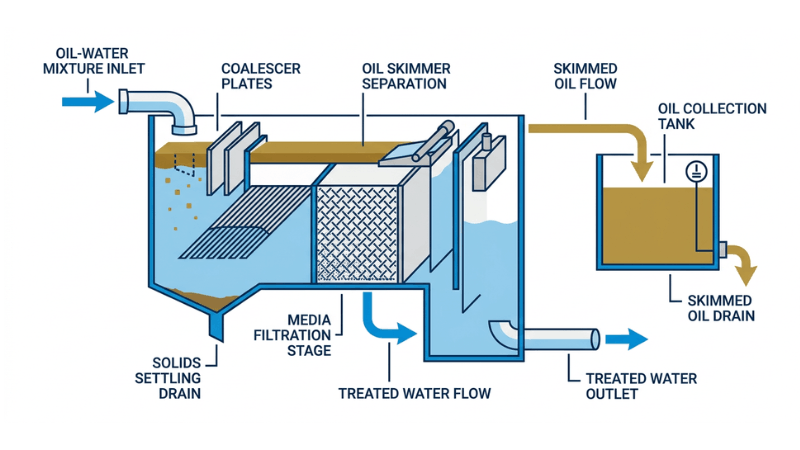
Automobile wastewater often carries free and emulsified oils, paint sludge, and suspended solids. Effective primary treatment protects downstream biological systems and reduces chemical use. Key technologies include:
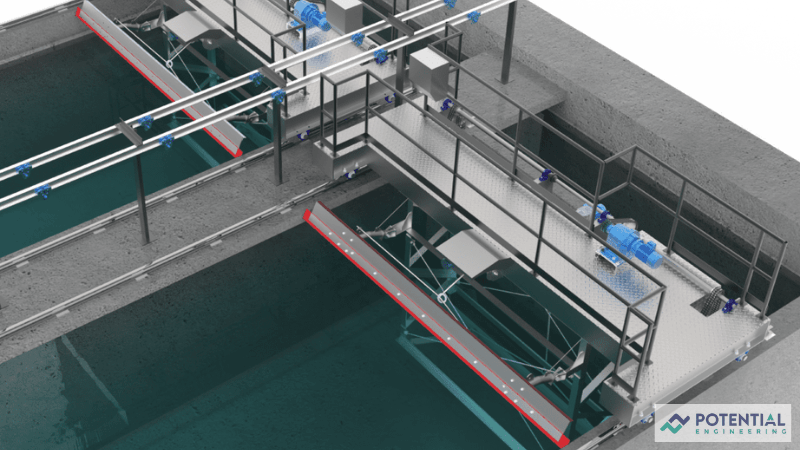
- • API Separator (American Petroleum Institute): A gravity-based system for removing large oil droplets and suspended solids.
-
- • CPI (Corrugated Plate Interceptor): Compact system incorporates inclined plates to enhance separation in compact spaces.
-
- • TPI (Tilted Plate Interceptor): Specialized for oil water separation, often with coalescing media to handle emulsified oils efficiently.
-
- • Hydrocyclone Oil Water Separator: Uses centrifugal force to remove fine oil droplets.
-
- • Coalescer Oil Water Separator: Aggregates small oil droplets into larger ones for easy removal.
-
Paint Residues: Wastewater from painting booths contains pigments, resins, solvents, and VOCs. Lamella clarifiers or coagulation–flocculation systems are used to settle paint sludge and reduce turbidity, preparing water for secondary treatment.
Why Secondary Treatment is Key for BOD and COD Control
Neutralized wastewater enters bioreactors, where aerobic systems (activated sludge, trickling filters) or anaerobic digesters degrade organic matter, oils, and coolants. This stage significantly reduces BOD, COD, odor, and VOCs, while stabilizing pH, preparing the water for advanced polishing.
How Tertiary Treatment Supports Water Recycling
To meet stricter regulatory standards, advanced systems such as reverse osmosis (RO), ion exchange, activated carbon adsorption, and advanced oxidation are applied. These remove dissolved salts, heavy metals, phosphates, nitrates, and residual VOCs, producing water suitable for recycling. Further aeration treatment restores oxygen levels before reuse or safe discharge.
By combining primary oil water separation, paint sludge removal, biological degradation, and tertiary polishing, automobile industries can ensure regulatory compliance, protect downstream treatment processes, and enable water recycling or zero liquid discharge (ZLD) initiatives.
How can Automobile Industries Reduce Treatment Costs while meeting Compliance
Wastewater treatment in the automobile industry is not just about regulatory compliance; it is also a major operational expense. A well-designed wastewater treatment plant (WWTP/ETP) ensures that the most effective processes are incorporated, which improves operational efficiency and reduces costs across the entire treatment processes.
TVS Motor Company provides a practical example of sustainable wastewater management. Across its facilities, 100% of wastewater is treated and reused, with treated sewage at the Nalagarh plant repurposed for gardening and toilet flushing, reducing freshwater consumption. At its Hosur plant, the company operates under a Zero Liquid Discharge (ZLD) framework, maximizing water reuse, cutting operational costs, and reinforcing sustainability, proving that sustainable wastewater practices can simultaneously enhance compliance, efficiency, and business performance.
Key Strategies for Cost Reduction
1. Optimize Primary Stage for Downstream Efficiency
Selecting the right oil water separator at the primary stage ensures effective bulk removal of oils and grease. This protects downstream equipment, reduces chemical consumption, and prevents system downtime. Proper handling of paint residues via coagulation flocculation or lamella clarifiers similarly enhances the efficiency of secondary and tertiary processes.
2. Recycle and Reuse Treated Water
Implementing ZLD systems allows treated water to be reused in cooling, washing, or other operations, reducing fresh water procurement costs while minimizing environmental impact.
3. Optimize Chemical Usage
Precise dosing for pH correction, coagulation, and flocculation prevents overuse. Cost-effective agents like lime can replace more expensive alternatives, and online monitoring ensures accurate chemical application.
4. Automate Monitoring and Control
Online meters for pH, TDS, COD, BOD, and oil & grease reduce manual testing, cut labor costs, and allow timely adjustments, keeping effluent quality within limits while avoiding unnecessary chemical or energy use.
5. Reduce Sludge Handling Costs and Recover Resources
Biological treatment processes generate less sludge than purely chemical methods. Additionally, recovered materials such as metals, oils, or pigments can be repurposed or sold, offsetting disposal costs and turning waste into value.
6. Preventive Maintenance and System Optimization
Regular calibration of instruments, timely replacement of filters and membranes, and proactive pump and equipment maintenance ensure efficient operation, extend equipment life, and minimize unexpected breakdowns.
7. Enhance Environmental Responsibility and Brand Value
Investing in an efficient WWTP helps adhere to compliance with environmental standards, ensures resource-efficient operations, and mitigate effluent discharge.
A well-designed WWTP ensures that every stage — from primary oil water separation to tertiary polishing, operates optimally. The process synergy reduces chemical use, safeguards downstream equipment, lowers operational costs, and improves overall efficiency while ensuring regulatory compliance.
Practices like water recycling, resource recovery, and automation further cut costs and enhance sustainability. Beyond operational benefits, robust wastewater management strengthens brand value and CSR, helping industries achieve a triple win: compliance, cost efficiency, and environmental stewardship.
Frequently Asked Questions (FAQs)
Q.1 How does wastewater from electric vehicle (EV) battery production differ from conventional vehicle manufacturing?
A: EV manufacturing, especially battery production, generates wastewater rich in heavy metals, acids, and chemical solvents. Unlike conventional vehicle effluent, EV wastewater often requires specialized treatment methods like vacuum evaporation or ZLD systems to safely recover and recycle water and chemicals.
Q.2 Can automobile industries reduce water usage without compromising product quality?
A: Yes. Strategies include optimizing flushing processes in production, implementing water recycling systems, and reusing treated effluent in cooling, washing, or other operations. Efficient treatment plants ensure water is reused safely without affecting quality standards.
Q.3 Why is wastewater treatment crucial in the automobile industry?
A: Wastewater from automobile manufacturing contains oils, grease, paint residues, heavy metals, detergents, and fluctuating pH levels. Proper treatment ensures regulatory compliance and environmental protection, but it also drives operational efficiency. By recycling water, reducing chemical use, and safeguarding downstream equipment, industries not only lower costs but also strengthen their sustainability profile. In this way, wastewater treatment becomes a lever for both profitability and long-term environmental responsibility.
Q4. Why is oil spill response important?
A: An effective oil spill response is crucial because it minimizes immediate and long-term damage to marine and freshwater ecosystems, protects wildlife, and reduces contamination of soil and water sources. It also helps safeguard human health by preventing exposure to toxic substances, supports local economies that rely on fishing and tourism, and ensures compliance with environmental regulations.
Q.5 Why is oily water treatment necessary for industries?
A: Industries like oil & gas, shipping, food processing, and petrochemicals produce wastewater containing oil. Oily water treatment ensures compliance with environmental regulations, protects ecosystems, and lowers operational risks.