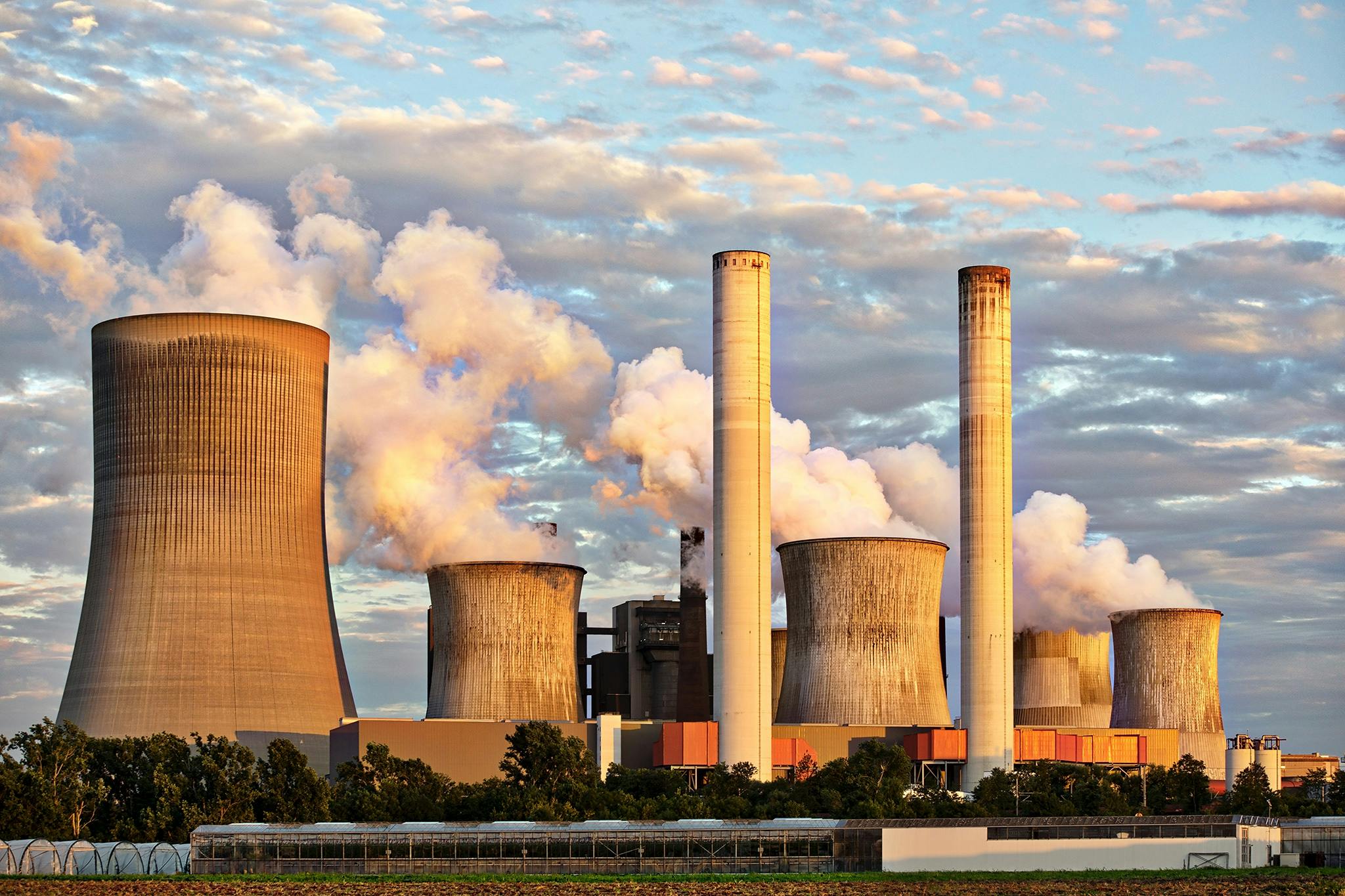
Power plants rely extensively on water for cooling, generating steam managing ash and controlling emissions. However utilizing water on such a large scale results, in wastewater streams that require sophisticated, dependable and eco-friendly treatment solutions
Choosing the right water treatment setup is not just a compliance requirement – it directly impacts operational efficiency, equipment life, safety, and power output.
This guide breaks down what types of wastewater power plants generate, the best treatment technologies, and how efficient wastewater treatment enhances power plant performance.
What Types of Wastewater Do Power Plants Generate?
Power plants discharge multiple wastewater streams, each with different contaminants and regulatory requirements. Understanding these streams is the first step toward selecting the ideal treatment solution.
1. Cooling Tower Blowdown
Cooling towers accumulate dissolved solids over time. Blowdown removes excess minerals to prevent scaling and corrosion.
Typical contaminants:
2. Boiler Blowdown
Boilers eject water periodically to control concentration of impurities.
Contains:
Dissolved salts
Silica
Corrosion by-products
Suspended solids
3. Flue Gas Desulfurization (FGD) Wastewater
Coal-based power plants generate FGD wastewater during SO₂ scrubbing.
Key pollutants:
4. Ash Handling Wastewater
Generated during fly ash or bottom ash sluicing.
Typical content:
Suspended solids
Metals
Fine ash particles
Alkalinity
5. Process & Domestic Wastewater
Includes wash water from equipment cleaning, floor drains, RO reject, and sanitary wastewater.
Which Water Treatment Technologies Are Best for Power Plants?
Each water source and wastewater stream requires a technology designed to meet strict industry standards. Advanced engineering systems ensure reliability, low downtime, and sustainability.
1. Pre-Treatment & Screening
Power plants must remove large solids early to protect downstream systems.
Common equipment:
Fine screens
Bar racks
Grit chambers
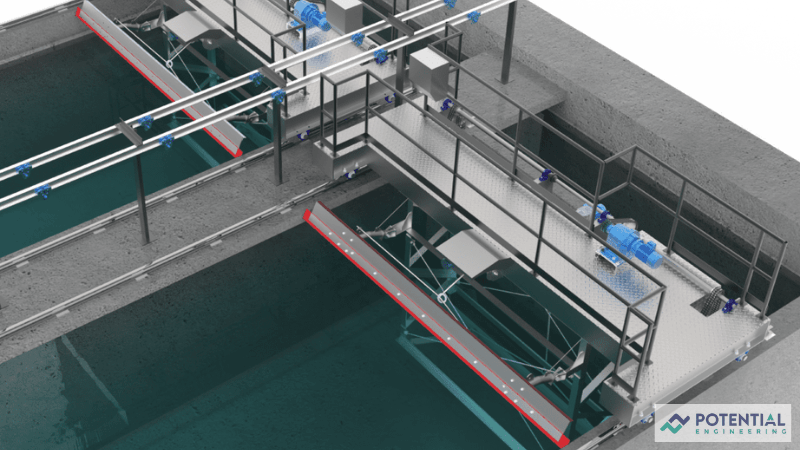
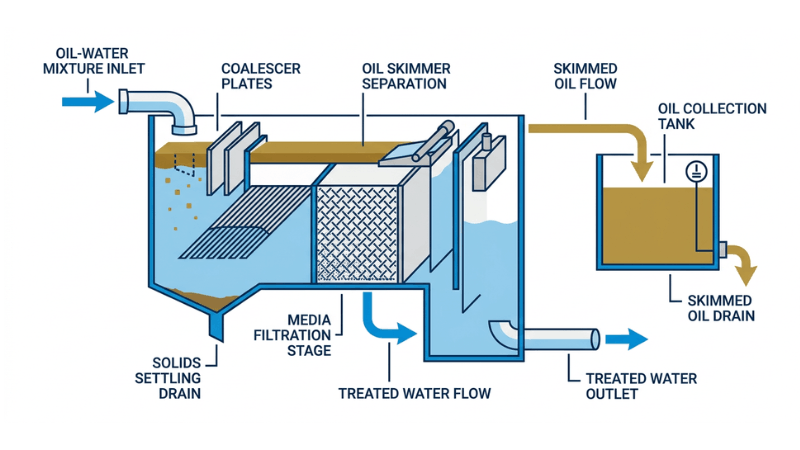
Oil-water separators
Screens like honeycomb or bar rack systems ensure effective removal of debris — especially in water intake systems exposed to trash, vegetation, or suspended solids.
Use Case:
Preventing pipeline leakage issues in cooling water circuits by ensuring only clean water enters the system.
2. Clarification & Chemical Treatment
To handle high solids, power plants commonly use:
These systems remove turbidity, heavy metals, and reactive compounds effectively.
3. Advanced Filtration Technologies
Depending on water quality goals, plants deploy:
UF membranes are especially effective for cooling tower make-up water and pre-treatment before RO.
4. Reverse Osmosis (RO) & Deionization
For boiler feed water and high-purity steam applications.
RO provides:
5. FGD Wastewater Treatment Systems
FGD streams require specialized multi-stage treatment.
Best technologies:
6. Zero Liquid Discharge (ZLD) Systems
Thermal and membrane-based ZLD systems help meet water reuse and no-discharge mandates.
ZLD typically includes:
This is preferred for plants aiming for sustainable operations and compliance with strict environmental regulations.
7. Industrial Water Treatment Systems for Reuse
To lower water consumption, plants reuse:
Cooling tower blowdown
Treated FGD wastewater
RO permeate
Condensate
This reduces operational cost and fresh water dependency — a growing requirement in water-scarce regions.
How Does Efficient Wastewater Treatment Improve Power Plant Operations?
An optimized wastewater treatment system is not just an environmental necessity – it directly strengthens operational performance.
1. Prevents Scaling, Corrosion, and Equipment Failure
Cleaner feed water protects expensive assets like:
Cooling towers
Heat exchangers
Boilers
Condenser systems
Result: Lower downtime and higher efficiency.
2. Enhances Power Generation Efficiency
When boilers and turbines operate with high-purity water, heat transfer improves while energy losses reduce.
Efficiency boost comes from:
3. Reduces Operational Costs Long-Term
Modern treatment systems lower costs by:
4. Supports Sustainability & Regulatory Compliance
Strict pollution control norms push power plants toward advanced treatment solutions.
Benefits:
Better effluent discharge quality
Higher water reuse percentage
Reduced dependency on freshwater
Enhanced ESG performance
5. Prevents Unscheduled Shutdowns
Poor water quality is one of the top reasons for emergency power plant shutdowns.
Efficient treatment eliminates hidden risks like microbial growth, corrosion, and fouling.
Frequently Asked Questions (FAQs)
Q1. What types of wastewater do power plants generate?
A. Power plants generate several wastewater streams including cooling tower blowdown, boiler blowdown, ash handling wastewater, and FGD wastewater. Each stream contains different contaminants, requiring specialized treatment processes for compliance and plant efficiency.
Q2. Which water treatment technologies are best for power plants?
A. The ideal technologies include fine screening, clarification, membrane filtration, reverse osmosis, FGD wastewater treatment systems, and zero liquid discharge (ZLD). Selection depends on water quality needs, plant type, and environmental regulations.
Q3. How does efficient wastewater treatment improve power plant operations?
A. Efficient treatment minimizes scaling, corrosion, and biofouling in critical equipment. It improves thermal efficiency, reduces downtime, and lowers chemical and maintenance costs. Additionally, it supports sustainable operations and higher reuse of treated water.
Q4. Why do power plants use reverse osmosis systems?
A. Reverse osmosis ensures high-purity water needed for boilers, turbines, and cooling systems. It removes dissolved salts, silica, and organic impurities, preventing corrosion and deposit formation that decrease performance.
Q5. Are ZLD systems necessary for modern power plants?
A. In regions with strict discharge norms or limited freshwater availability, ZLD systems are essential. They eliminate liquid discharge, maximize water reuse, and help meet stringent environmental and sustainability goals.
Conclusion
Selecting the right water treatment system for a power plant requires understanding wastewater characteristics, operational goals, compliance requirements, and long-term sustainability targets. With modern treatment technologies, including screening, clarification, RO, and ZLD, power plants can achieve cleaner operations, lower costs, and increased efficiency.