Best Practical Methods for Effective Sugar Industry Wastewater Treatment

Best Practical Methods for Effective Sugar Industry Wastewater Treatment
Sugar production generates wastewater with complex contaminants that need proper treatment to prevent environmental harm and comply with regulations. Understanding the best wastewater treatment approaches helps sugar mills manage their effluent sustainably and efficiently.


What Contaminants Are Found in Sugar Industry Wastewater?


Sugar mill wastewater typically contains:

  •  • High concentrations of organic matter, including sugars, molasses, and volatile fatty acids, resulting in elevated biochemical oxygen demand (BOD) and chemical oxygen demand (COD).

  •  • Suspended solids such as bagasse fibers, press mud, and soil residues.

  •  • Oils and grease from mill machinery and processing operations.

  •  • Trace amounts of heavy metals like copper, lead, manganese, and zinc.

  •  • Salinity, especially in wastewater from sugar refining processes.
  •  

These pollutants can degrade aquatic ecosystems and soil quality if discharged untreated.


Common Effective Treatment Methods

Several biological and physico-chemical methods are utilized to treat sugar industry wastewater:
 
  • Anaerobic Treatment: Decomposes organic matter without oxygen, generating biogas (methane) in the process. Methods include Upflow Anaerobic Sludge Blanket (UASB) reactors, which offer high COD reduction and energy recovery advantages.
  •  
  • Aerobic Treatment: Uses oxygen-consuming bacteria to further break down residual organic pollutants. It is often combined with anaerobic stages to achieve thorough treatment.
  •  
  • SBR Wastewater Treatment (Sequencing Batch Reactor): This fill-and-draw activated sludge system treats wastewater in batch cycles including phases of filling, aerating, settling, and decanting. SBR is flexible, energy-efficient, and suitable for managing variable flows typical in sugar mill effluents. It achieves effective removal of organic pollutants and nutrients and is increasingly used in sugar industry wastewater management.
  •  
  • Physico-chemical Processes: Coagulation, flocculation, and electrochemical oxidation help remove suspended solids, color, and specific contaminants.
  •  
  • Membrane Bioreactors and Filtration: Provide advanced treatment, including removal of nutrients and suspended solids for effluent polishing.
  •  
  • Zero-Liquid Discharge (ZLD) Systems: Combine multiple processes, including evaporation and membrane separation, to recycle all wastewater completely, minimizing any waste discharge.
  •  

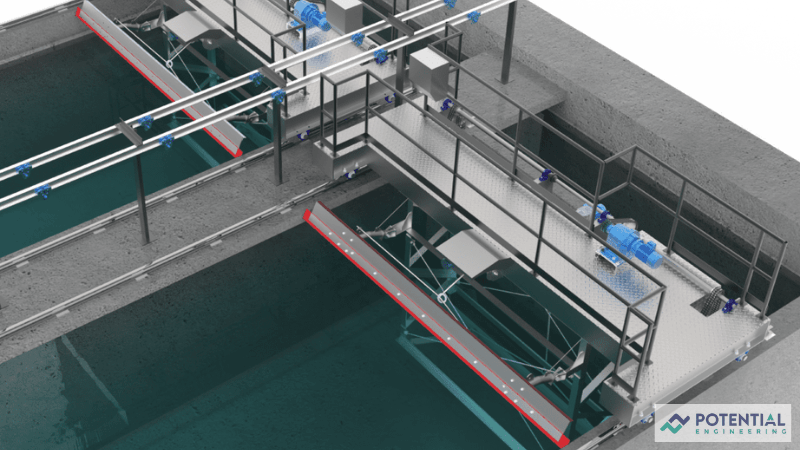
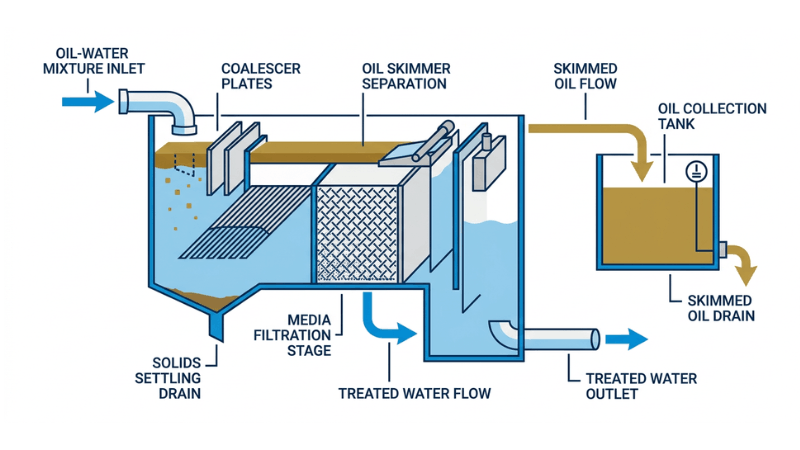
Separation of oils and floating scum upstream in the process is critical. Equipment such as industrial skimmers and oil and grease removal systems improve treatment efficiency, while sludge and residue management can be optimized by chain scraper systems.


Benefits of Integrating Treatment Methods

 
  • Significant reduction in BOD and COD levels, helping meet strict discharge standard

  • Recovery of biogas as renewable energy reduces overall energy costs

  • Minimization of sludge production with anaerobic methods lowers disposal challenges

  • Enhanced compliance with environmental regulations related to water pollution

  • Potential reuse of treated water for irrigation or industrial purposes, conserving freshwater
  •  

Frequently Asked Questions (FAQs)

Q.1 Why is anaerobic treatment preferred for sugar industry wastewater ?

A: Anaerobic treatment effectively handles high-strength organic waste, produces renewable biogas, and generates less sludge than aerobic processes.


Q.2 What is SBR wastewater treatment and why is it useful ?

A: SBR wastewater treatment is a batch process that treats effluent in cycles of aeration and settling within a single tank. It is flexible, efficient, and well-suited for sugar industry wastewater with fluctuating flow rates.


Q.3 What makes zero-liquid discharge important in sugar mills ?

A: Zero-liquid discharge ensures that no wastewater is released, promoting maximum water reuse and minimizing environmental impact.


Q.4 How can oils and floating scum be managed in sugar mill wastewater ?

A: Separation methods like skimming and flotation remove these substances before biological treatment to maintain efficiency.


Q.5 Are these wastewater treatment methods adaptable to varying mill sizes ?

A: Yes, scalable solutions allow mills of all sizes to implement effective wastewater management aligned with their operational capacity.