The Role of Water Control Gates in Modern Water Management
The Role of Water Control Gates in Modern Water Management
Water control gates are a simple yet powerful tool for managing the flow of water and liquids.Whether in treatment plants, irrigation networks, or industrial processes, these gates play a crucial role in maintaining controlled water levels. Both industrial operations and municipal systems depend
on water control gates to ensure efficient, safe, and reliable flow management.
How do Water Control Gates Work
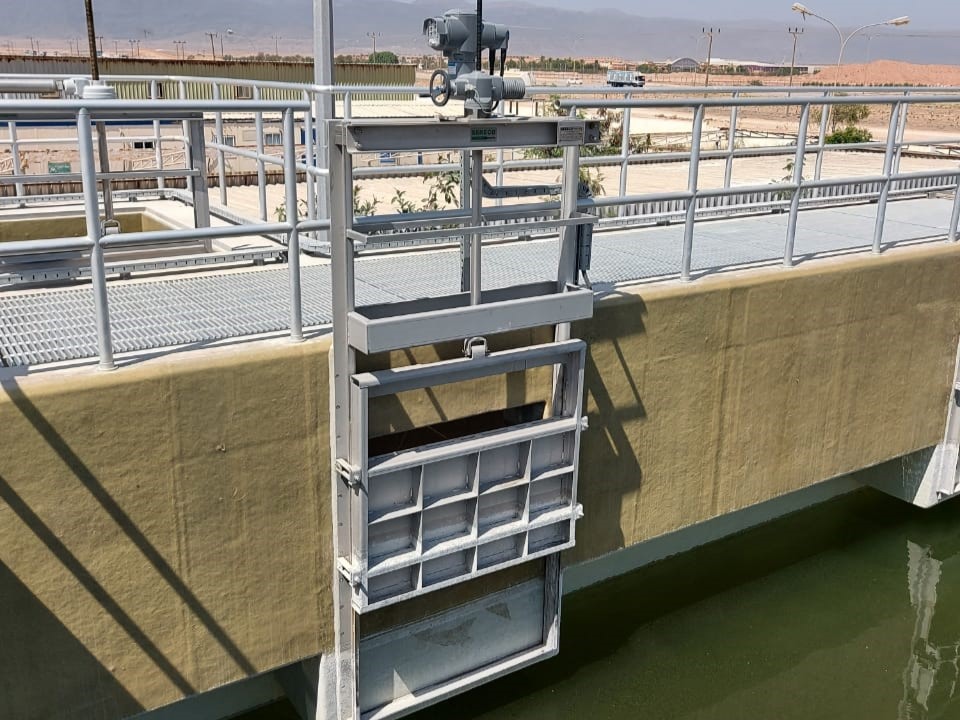
Water control gates are mechanical structures engineered to regulate or isolate the flow of water
and other liquids within channels, culverts, pipelines, reservoirs, and treatment facilities. They function by raising, lowering, or partially positioning a movable barrier within a frame to control flow
rate, depth, and hydraulic pressure.
Typically, these gates are mounted within reinforced concrete headwalls, channel walls, or pipelinesections, depending on site requirements and hydraulic design. The installation orientation may be vertical, inclined, or radial, based on flow direction and operational constraints. Gate frames are anchored with embedded bolts or anchors to withstand pressure and maintain structural alignment. Depending on the application, gates may be operated manually, hydraulically, or automatically.
The crux is that water control gates are a core component of hydraulic infrastructure, ensuring precise flow regulation, flood mitigation, and operational efficiency across industrial, municipal, and irrigation systems.
Why Industries Use Water Control Gates
Water control gates are indispensable across a range of water-intensive industries, where precision
and reliability in flow regulation are key to operational efficiency and sustainability.
• Municipal Water and Wastewater Treatment Plants: Gates regulate inflow, direct treated water, and prevent overflow during heavy rainfall or high-demand conditions. They ensure steady water levels and protect downstream systems from flooding or contamination.
- • Power Generation: Hydropower plants use water gates to manage release and pressure for turbines, balancing energy output, reservoir safety, and ecological flow.
- • Mining and Process Industries: Used to handle slurries, tailings, and process water efficiently; enabling water recycle, reduce waste discharge, and improve reliability.
- • Agriculture and Irrigation Systems: Control gates distribute water evenly, ensuring efficient water supply leading to better crop yield and conserving resources through efficient flow adjustment.
- • Pharmaceutical Industry: In utility and effluent systems, gates manage purified water, cooling systems, and treated discharge, supporting compliance with stringent quality and environmental norms.
- • Textile and Dyeing Plants: Gates regulate washing, bleaching, and dyeing processes, promoting water reuse and sustainable treatment cycles.
- • Food and Beverage Sector: Control gates manage process water, cooling, and effluent treatment, maintaining hygiene while minimizing resource consumption.
- • Pulp and Paper Industry: Gates support large-scale water circulation and discharge control, maintaining consistency in production and environmental compliance.
- • Steel and Metal Industries: These sectors rely on gates to manage cooling water and effluents, optimizing recycling and minimizing thermal pollution.
Across these diverse sectors, water control gates provide precise and dependable water management supporting productivity, safety, and environmental responsibility.
What makes Water Control Gates Essential for Flood and Flow Management
Water control gates are a cornerstone of flood prevention and flow management. By adjusting gate openings, operators can precisely control the volume of water passing through canals, dams, and drainage networks, protecting surrounding areas during heavy rainfall or storm events.
In industrial and municipal systems, gates help prevent overloads and ensure that treatment plants and reservoirs operate safely and efficiently.
Beyond flood control, they maintain ecological flow during dry periods, helping preserve aquatic balance. Their adaptability and automation make them indispensable to modern water infrastructure, offering a reliable and sustainable means of controlling one of nature’s most dynamic forces.
From municipal wastewater treatment to industrial flow systems, water control gates remain a simple yet powerful technology for managing water efficiently and safely. They not only prevent floods and optimize water use but also support sustainability through recycling and reduced wastage.
In an era of increasing environmental and operational challenges, water control gates continue to be an essential element of resilient, efficient, and sustainable water management systems across industries.
Frequently Asked Questions (FAQs)
Q.1 What are the common types of water gates by design ?
A:
- • Sliding Gates: Move vertically or horizontally to control flow.
- • Radial Gates: Curved gates that rotate for precise release.
- • Flap Gates: Allow one-way flow and prevent backflow.
- • Crest Gates: Used in dams to control overflow by raising or lowering the crest.
Q.2 What advanced technologies are used in modern water gates ?
A:
- • Hydraulic or pneumatic actuation for smooth, heavy-duty operation.
- • Automated control systems with sensors for real-time monitoring.
- • Remote operation via SCADA systems for both industrial and municipal facilities.
- • Eco-friendly designs with fish passages and sediment management.
These technologies enhance precision, reduce manual intervention, and improve safety while supporting sustainability.
Q.3 What factors should I consider when choosing a water gate ?
A:
- • Flow rate and water pressure
- • Type of liquid and debris content
- • Environmental conditions (corrosion, sedimentation, freezing)
- • Operation mode (manual, hydraulic, or automated)
Q.4 How important is material selection ?
A: Very important. Gates must resist corrosion, pressure, and wear. Common materials include stainless steel, aluminium, and coated carbon steel.
Q.5 Should I prioritize design or technology ?
A: Both matters. The design must fit your system, while modern technology enhances efficiency, reliability, and long-term performance.