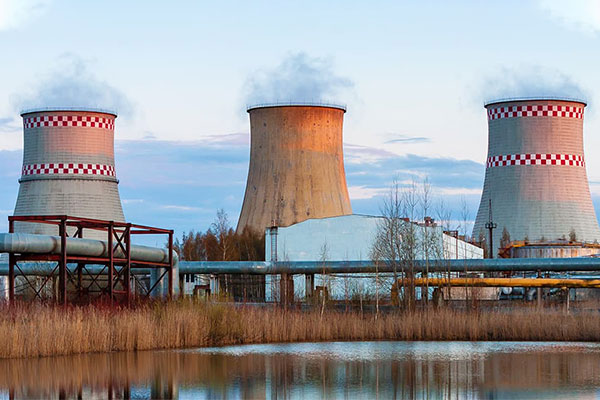
Power production depends heavily on water as a critical resource. From cooling turbines to producing steam and handling waste byproducts, power plants depend heavily on water at nearly every stage of operation. Most plants heat water using energy sources like coal, gas, uranium, biomass, solar, or geothermal. The steam produced spins turbines to generate electricity, then cools, condenses, and re-enters the cycle for continuous power generation.
According to a report by Central Pollution Control Board, Bangalore, nearly 80% of water consumed in power plants is used for cooling. This results in significant water withdrawals and discharges, often containing heat, chemical residues, heavy metals, and suspended solids. Without proper treatment, this wastewater can pose serious risks to ecosystems and also affect the efficiency of the power plant.
This raises an important question—what factors determine the right water treatment system for power plants?
To arrive at the right choice, it’s essential to consider the three interconnected aspects. The first is ensuring proper feed water treatment, which is critical for preventing scaling, corrosion, and operational inefficiencies in boilers and turbines. The second is understanding the different types of wastewaters that power plants generate. Third is evaluating the treatment technologies that are most effective for managing complex effluents.
What Type of Wastewater do Power Plants Produce?
Power plants consume and discharge vast amounts of water and the quality of this discharged water depends largely on the processes and fuel sources used. Broadly, the wastewater streams from power plants can be grouped into the following categories:
- 1. Cooling Water Discharge: The majority of water withdrawn by thermal power plants is used for cooling. Once-through cooling systems, water is released back into rivers, lakes, or oceans. This thermal discharge can significantly alter aquatic ecosystems, reduce dissolved oxygen levels and stress marine life.
-
- 2. Boiler Blowdown: To prevent scale and corrosion, boilers require periodic removal of concentrated dissolved solids. The blowdown water typically contains high levels of salts, treatment chemicals, and other impurities that must be carefully managed before disposal.
-
- 3. Flue Gas Desulfurization (FGD) Wastewater: Coal- and oil-fired plants often employ flue gas desulfurization units to reduce sulphur dioxide emissions. The resulting wastewater is complex, containing heavy metals such as mercury, selenium, and arsenic, along with high chloride concentrations.
-
- 4. Ash Handling Wastewater: Plants that burn coal generate large volumes of fly ash and bottom ash. When these residues are sluiced with water for handling and storage, the wastewater can carry suspended solids, trace metals, and contaminants that require treatment.
-
- 5. Process and Maintenance Wastewater: Apart from primary operations, power plants produce wastewater from equipment cleaning, floor washing, and other maintenance activities. These streams may contain oils, greases, solvents, and other chemical residues.
-
Together, these diverse wastewater streams highlight the complexity of treatment requirements in power plants. A single solution rarely fits all needs—making it vital to match treatment technologies to specific wastewater characteristics.
Which Water Treatment Technologies are Best for Power Plants?
Because power plants generate multiple wastewater streams with different compositions, the most effective approach is to use a combination of treatment technologies, tailored to each process. Some key solutions include:
Feed Water Treatment
Boilers require ultrapure water to avoid scaling, corrosion, and efficiency losses. Typical treatment involves clarification, filtration, reverse osmosis (RO), and polishing with ion exchange or electro deionization (EDI). Proper feed water treatment extends equipment life and ensures consistent steam quality.
Cooling Water Treatment
Cooling towers need water conditioning to control scaling, fouling, and microbial growth. It often involves filtration, chemical dosing, and softening. Cooling tower blowdown (CTBD) can be treated through RO or advanced systems to enable water reuse and reduce discharge.
Clarification and Filtration
Primary methods such as settling tanks, sand filters, and ultrafiltration remove suspended solids from ash-handling or process wastewater, lowering the load on downstream systems.
Oil and Grease Removal
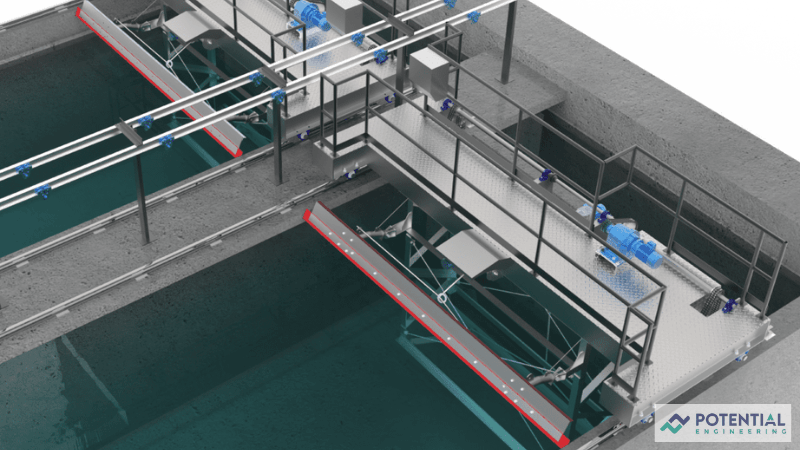
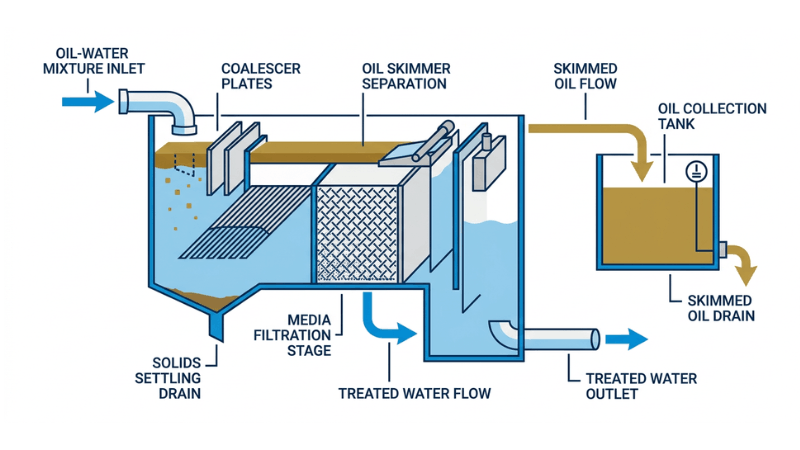
Wastewater from turbines, fuel storage, and maintenance activities often contains oil and grease. If not removed, these contaminants can foul membranes, interfere with biological processes, and cause environmental harm. Solutions such as oil-water separators, dissolved air flotation (DAF), and coalescers effectively separate free and emulsified oils, protecting downstream treatment units.
Chemical Treatment
Processes like coagulation, flocculation, pH adjustment, and precipitation help remove metals and dissolved impurities, especially in flue gas desulfurization (FGD) wastewater.
Advanced and Integrated Systems
Technologies such as Zero Liquid Discharge (ZLD) or high-recovery RO combine with multiple processes such as membranes, evaporation, and crystallization help maximize water reuse and minimize brine disposal.
In practice, the right system depends on fuel type, water source, regulatory limits, and plant design. A well-planned combination ensures reliable operation, cost control, and environmental compliance.
Benefits of Efficient Water and Wastewater Treatment
Investing in the right water management system directly strengthens power plant operations in several ways, which are:
- 1. Higher Efficiency and Performance: Stable water quality supports steady steam generation and heat transfer efficiency. A cleaner system translates into better energy conversion rates, fuel efficiency, and fewer process interruptions.
-
- 2. Lower Operating Costs: By enabling water reuse, especially from cooling tower blowdown and process wastewater, plants reduce freshwater intake and chemical usage. Advanced systems like RO and ZLD also cut disposal costs by minimizing brine volumes.
-
- 3. Improved Reliability of Equipment: Proper treatment of feed water and cooling water reduces scaling, fouling, and corrosion in boilers, turbines, and cooling towers. This minimizes unplanned shutdowns and extends the lifespan of critical assets.
-
- 4. Regulatory Compliance and Environmental Protection: Efficient treatment ensures that thermal discharges, heavy metals, and chemical pollutants are removed before discharge. This helps plants stay compliant with increasingly strict environmental norms while reducing adverse ecological impact.
-
- 5. Sustainable Operations: Amid growing water scarcity, advanced treatment technologies enable power plants to conserve resources and minimize impact. Demonstrating such practices reinforces community goodwill and ensures long-term operational acceptance.
-
Efficient water management in power plants is also part of the larger industrial water-use challenge in India. The TERI Report on Benchmarking Industrial Water Use Efficiency highlights how sectors, including thermal power plants, must adopt best practices to optimize consumption and reduce freshwater dependence. Exploring such resources can give operators valuable insights and help align with national benchmarks. Read the full report here.
Building on these insights, it becomes clear that water and energy are inseparable in power generation, making efficient water and wastewater treatment a strategic priority for every plant. By understanding wastewater streams, applying the right mix of treatment technologies, and prioritizing efficiency, power plants can secure reliable operations, reduce costs, and meet environmental obligations. More than compliance, the right water treatment system is an investment in sustainability—ensuring electricity is generated responsibly while safeguarding precious water resources for the future.
Frequently Asked Questions (FAQs)
Q1.Why do power plants need so much water?
A. Power plants use water mainly for cooling, steam generation, and managing waste byproducts. Cooling alone accounts for nearly 80% of total water consumption in thermal power plants.
Q2. What happens if power plant wastewater is not treated properly?
A. Untreated wastewater may contain heat, chemicals, heavy metals, and suspended solids that can harm aquatic ecosystems, reduce water quality, and even affect the plant’s operational efficiency.
Q3. What are the main sources of wastewater in power plants?
A. The key wastewater streams include cooling water discharge, boiler blowdown, flue gas desulfurization (FGD) wastewater, ash handling wastewater, and process/maintenance wastewater.
Q4. Which treatment technologies are commonly used in power plants?
A. Treatment depends on the wastewater stream, but commonly used methods include clarification, filtration, chemical treatment, reverse osmosis (RO), ion exchange, Zero Liquid Discharge (ZLD), and oil-water separation.
Q5. Can wastewater from power plants be reused?
A. Yes. Advanced systems like high-recovery RO and ZLD allow for reuse of cooling tower blowdown and process wastewater, reducing freshwater intake and minimizing discharges.