Aquatic weeds look harmless from shore – a green carpet drifting across a lake or clogging a canal. But left unchecked they wreck ecosystems, block water use, and turn otherwise healthy water bodies into smelly, oxygen-starved sludge traps. This guide explains why removing those plants is critical for restoration, how mechanical removal works in practice, and when to schedule interventions for the best long-term outcome.
What Problems Do Aquatic Weeds Cause In Lakes And Canals?
Aquatic weeds are more than an eyesore. They trigger a cascade of ecological and social problems.
Oxygen depletion & fish kills. Dense weed mats block oxygen exchange and fuel massive diurnal DO swings. When plants die and decompose, microbial respiration consumes dissolved oxygen, causing stress or mortality for fish and invertebrates.
Algal blooms and eutrophication. Weeds can lock up nutrients and then release them during die-off, feeding cyanobacteria and harmful algal blooms.
Navigation & infrastructure impacts. Boats, intakes, and locks clog; pumps overheat or cavitate. Commercial and recreational navigation suffer severe constraints.
Habitat homogenization. Invasive species (e.g., water hyacinth, Eurasian watermilfoil) outcompete native plants and reduce habitat complexity needed by fish and birds.
Water quality & public health issues. Stagnant water favors mosquitoes and waterborne pathogens; odors and reduced aesthetics affect tourism and local wellbeing.
Economic costs. Losses from restricted irrigation, hydropower inefficiency, fisheries decline, and recurring removal operations add up fast.
In short: aquatic weeds convert productive water bodies into unstable, low-value systems unless actively managed. That’s why targeted aquatic weed removal is often the first practical step in restoration plans.
How Does Mechanical Aquatic Weed Removal Work?
When chemical or biological controls are unsuitable or restricted, mechanical removal is the frontline tool.
1. Survey & planning
Map infestation extent from boat or drone.
Identify species (fragmenting species require special handling).
Mark sensitive zones (spawning areas, wetlands) to avoid.
2. Cutting vs harvesting vs dredging
Cutting/cutting-and-floating – Rotary cutters sever plants; material may remain afloat and be collected later. Good for large dense mats but can fragment species that spread by fragments.
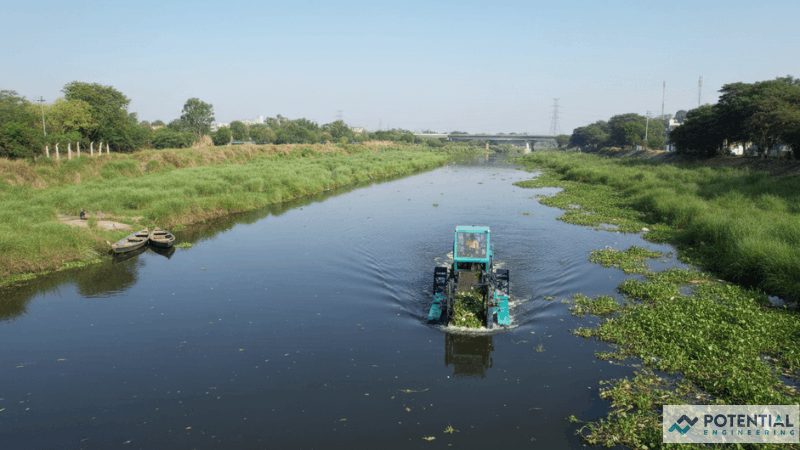
Mechanical harvesters – Purpose-built boats with front cutters, conveyors and onboard holds. They cut and lift biomass onto a barge for transport and disposal. Efficient for canals, shallow lakes, and irrigation channels.
Rakes & grapples – Suitable for localized patches and near-shore work.
Amphibious excavators / backhoes – Used where roots or rhizomes must be removed, or to access dense mats in very shallow water.
Suction dredging (hydraulic harvesting) – Removes softer macrophyte beds plus some sediment; useful when root material must be extracted.
3. Collection & transport
4. Disposal & reuse options
Composting — common, turns biomass into soil amendment (check for contaminants).
Anaerobic digestion / biogas — high-volume facilities may convert weeds into energy. Link to municipal processes like wastewater treatment for integrated solutions.
Agricultural use — dried biomass as cattle bedding or soil conditioner (species-specific).
Landfill — last resort for contaminated or invasive material.
5. Follow-up & monitoring
Mechanical removal usually gives immediate relief but must be followed by monitoring and maintenance to prevent rapid regrowth.
Combine with nutrient management and shoreline restoration to keep weeds from returning.
This is essentially how mechanical aquatic weed removal works: survey, cut/harvest, collect, dispose, and monitor.
When Should Aquatic Weed Removal Be Performed For Best Results?
Successful aquatic vegetation control is highly dependent on seasonal timing. Improperly timed removal efforts risk unintended seed dispersal or oxygen depletion, undermining the primary objectives of the remediation. Here are practical timing rules.
Optimal windows
Early growth phase (spring to early summer): Removing weeds before they reach full biomass reduces seed production and limits spread. This is often the single best time to act.
Before flowering/seed set: For species that reproduce by seed or fragments, extract plants before they flower.
Low-water periods: Lower levels expose root crowns and make access easier; machinery operates with less risk. But watch for exposed nesting or spawning habitats.
Avoid peak fish-spawning: Coordinate with fisheries authorities; removing plants during spawning can destroy eggs and juvenile habitat.
Practical constraints
Weather and access – storms and high flows reduce effectiveness.
Permit windows – many jurisdictions restrict removal during certain ecological windows; get permits and stakeholder buy-in early.
Resource availability – schedule when crews and disposal routes are ready; doing a partial job that leaves fragments is worse than doing nothing.
So, when should aquatic weed removal be performed for best results? — plan early, act before reproduction, avoid sensitive biological windows, and align operations with logistics and permitting.
Real-World Example
A mid-sized irrigation reservoir plagued by water hyacinth implemented a spring harvest using mechanical harvesters and composting the biomass on-farm. Within two seasons, navigation lanes reopened, dissolved oxygen improved, and the compost reduced farmers’ fertilizer bills – a win for water quality and the local economy.
Integrated Management & Long-Term Restoration
Mechanical removal is rarely the full solution. For sustained restoration, combine removal with:
Nutrient source control (agricultural runoff, sewage leaks).
Bank restoration and native plant reintroduction.
Targeted herbicide or biological controls only where permitted and safe.
Community engagement and regular maintenance cycles.
Consider linking harvest residues to local wastewater and water or treatment systems for co-processing and circularity.
Conclusion
Aquatic weeds are fast, hungry ecosystem engineers. They take over, change water chemistry, block use, and cost money. Mechanical aquatic weed removal delivers fast relief: it clears navigation, restores oxygen balance, and creates the conditions needed for long-term recovery. But removal is only the first move. For real restoration, pair removal with nutrient control, habitat rehabilitation, and sensible scheduling. Done right, you don’t just cut the green carpet – you give the lake or canal a fighting chance to recover and stay healthy.
Frequently Asked Questions(FAQs)
Q1. What problems do aquatic weeds cause in lakes and canals?
A: Aquatic weeds reduce dissolved oxygen, impair navigation, promote algal blooms, and alter habitat, leading to fish kills, public health issues, and economic losses.
Q2. How does mechanical aquatic weed removal work?
A: Mechanical removal involves mapping the infestation, using cutters or harvesters to sever and lift biomass, collecting it on barges, and transporting it for composting, digestion, or disposal.
Q3. When should aquatic weed removal be performed for best results?
A: Best results come from removing weeds early in the growth season, before flowering or seed set, during accessible low-water windows, and outside critical fish spawning periods.
Q4. Can harvested aquatic weeds be used beneficially?
A: Yes, composting and anaerobic digestion are common reuse options; however, check for contaminants and invasive propagules before reuse.
Q5. Is mechanical removal enough to prevent regrowth?
A: Not usually. Mechanical harvesting controls biomass but should be combined with nutrient reduction, shoreline fixes, and periodic monitoring to prevent recurrence.