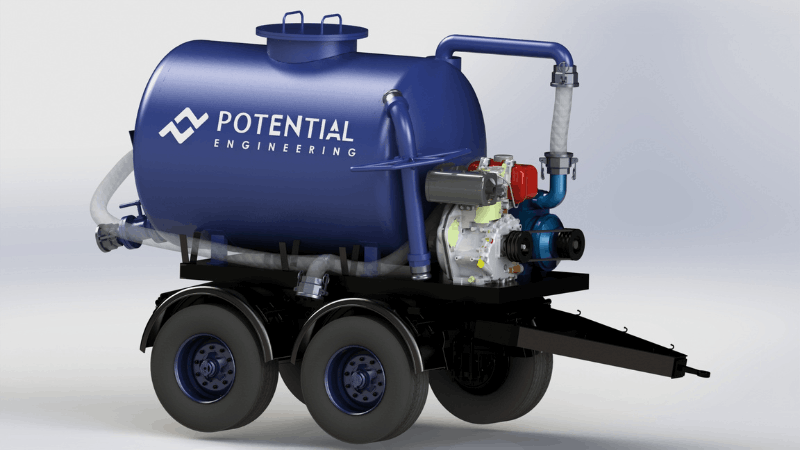
Industrial hydrocarbon facilities such as refineries, tank farms, storage terminals, and pipeline networks frequently deal with accumulated slop oil, contaminated water, and grit deposits. These materials collect in slop tanks, bund walls, drainage pits, and leak-prone pipeline sections.
Removing this mixture safely and efficiently is critical for preventing environmental contamination, maintaining operational integrity, and ensuring workplace safety. In such applications, a trolley mounted vacuum system offers a practical and highly effective solution.
Why Are Mobile Vacuum Systems Preferred Over Fixed Systems?
Hydrocarbon slop management is rarely static. Tank bottoms accumulate deposits over time, pipelines may develop localized leak points, and drainage channels can collect oily water during rainfall or operational flushing.
This is exactly why mobile vacuum systems are preferred over fixed systems.
1. Direct Access To Slop Tanks And Leak Points
Hydrocarbon slop oil tanks and leakage pipelines are often located in:
A trolley mounted vacuum system can be moved directly to the source, positioned beside a manhole or inspection hatch, and begin suction immediately.
Fixed systems require permanent piping and predefined suction points, which may not align with unpredictable leak or sludge accumulation locations.
2. Faster Spill And Leakage Response
In hydrocarbon environments, speed matters.
Delays in removing oil-water mixtures can lead to:
Mobile units allow immediate intervention. This rapid deployment capability explains why mobile vacuum systems are preferred over fixed systems in hydrocarbon recovery operations.
3. Reduced Infrastructure Complexity
Installing fixed vacuum networks across tank farms involves:
A trolley-based system avoids these requirements. It operates independently and can be deployed only when needed.
4. Multi-Location Utility
One trolley mounted unit can service:
Multiple slop tanks
Bund drains
Leakage trenches
Pipeline repair zones
This flexibility provides operational efficiency without large capital investment.
How Do Trolley Mounted Systems Improve Workplace Safety?
Hydrocarbon slop environments pose multiple hazards:
Understanding how trolley mounted systems improve workplace safety highlights why they are widely used in tank cleaning and pipeline maintenance.
1. Reduced Manual Handling Of Contaminated Slop
Traditional removal methods may involve:
Manual scooping
Portable pumps
Drum transfers
These increase worker exposure to hydrocarbons.
A trolley mounted vacuum system:
Transfers slop directly into a sealed tank
Minimizes operator contact
Reduces splashing and spill risk
2. Contained Suction And Transfer
Well-designed systems include:
This ensures that recovered oil-water mixtures remain contained throughout the process.
3. Lower Slip And Fire Risk
Prompt removal of:
Free-phase oil
Oily water
Grit deposits
reduces slip hazards and lowers the likelihood of ignition in hydrocarbon storage areas.
4. Reduced Confined Space Entry
Slop oil tanks often require confined-space procedures for cleaning.
Using a suction hose inserted from above:
5. Hazardous Area Compatibility
When designed for hydrocarbon use, trolley systems can include:
This makes them suitable for operation near flammable liquids.
What Types Of Waste Can Be Handled By These Systems?
1. Free-Phase Oil
Accumulated oil layers in:
Slop tanks
Containment pits
Drainage chambers
can be directly suctioned and transferred into a vacuum tank system for disposal or reprocessing.
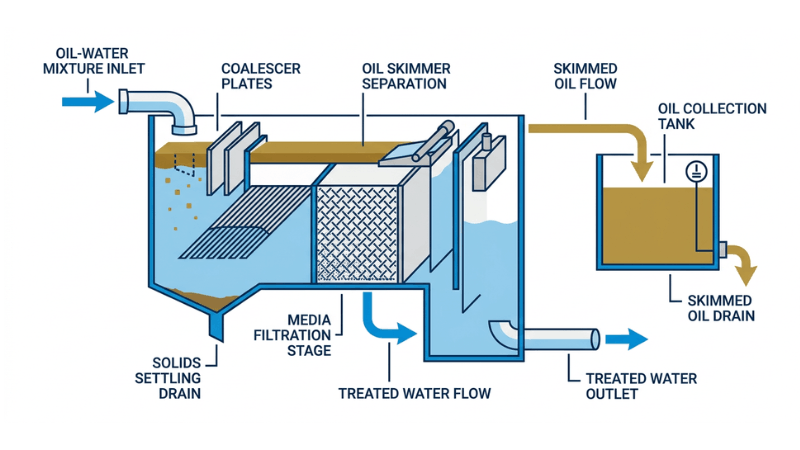
2. Oil–Water Mixtures
Hydrocarbon slop commonly consists of:
Emulsified oil
Contaminated water
Settled hydrocarbons
Multi-stage separation within the system allows safe handling of this mixture.
3. Grit And Sediment
Over time, tank bottoms accumulate:
Sand
Rust particles
Scale deposits
Solid sediment
Trolley systems designed for slop recovery can handle these grit components without clogging.
4. Sludge From Tank Bottoms
Heavy hydrocarbon sludge that forms at the base of storage tanks can be removed using high-suction configurations connected to a sealed vacuum tank system.
5. Leakage Accumulations In Pipelines
Pipeline leakage zones often collect:
Mobile vacuum units can remove this material before it spreads into surrounding soil or drainage systems.
System Integration And Operational Considerations
Trolley mounted units used for hydrocarbon recovery typically include:
High-capacity suction pumps
Sealed vacuum tank systems
Grit separation baskets
Oil-resistant hoses
Explosion-proof electrical components
They can operate independently or supplement centralized vacuum systems during maintenance or emergency response operations.
Conclusion
Trolley mounted vacuum systems provide a practical and efficient solution for removing oil, water, and grit from hydrocarbon slop oil tanks and leakage pipelines. Their mobility enables rapid response, localized suction, and contained transfer of hazardous mixtures. By reducing manual handling, limiting environmental exposure, and improving containment, these systems enhance both operational efficiency and workplace safety in hydrocarbon storage and pipeline facilities.
Frequently Asked Questions(FAQs)
Q1. Why are mobile vacuum systems preferred over fixed systems?
A: Mobile systems can be deployed directly at slop tanks or leak points, allowing faster response and avoiding complex permanent piping installations.
Q2. How do trolley mounted systems improve workplace safety?
A: They reduce manual handling, minimize exposure to hydrocarbons, contain slop in sealed tanks, and lower slip and fire hazards in tank farm areas.
Q3. What types of waste can be handled by these systems?
A: They are designed specifically to handle free-phase oil, oil-water mixtures, grit, sediment, and hydrocarbon sludge from tanks and leakage pipelines.
Q4. Can trolley mounted vacuum systems be used in hazardous areas?
A: Yes, when equipped with explosion-proof motors and proper grounding systems, they can safely operate in hydrocarbon environments.