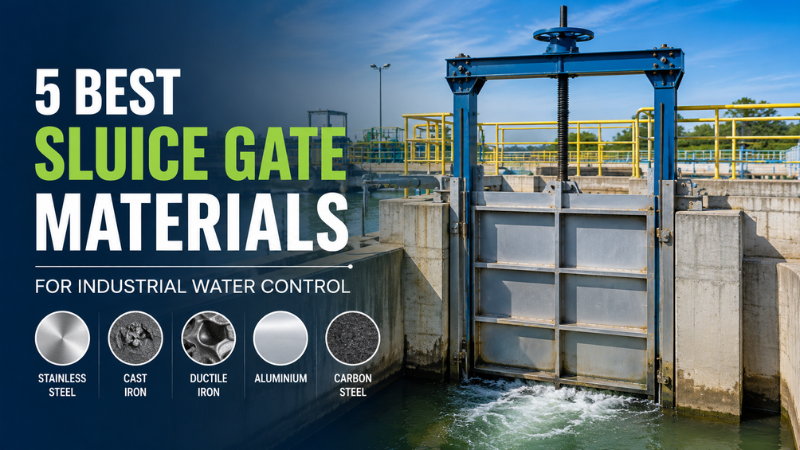
A sluice gate controls the flow, isolation, or level of water and wastewater by using a movable gate panel. The material used to manufacture a sluice gate directly affects corrosion resistance, durability, maintenance requirements, and long-term operating cost.
Choosing the right sluice gate material depends on the fluid being handled, operating environment, chemical exposure, pressure conditions, and expected service life. Stainless steel offers strong corrosion resistance, while cast iron remains a practical choice for many conventional water control applications.
What Is a Sluice Gate and Why Does Material Selection Matter?
A sluice gate is a mechanical water control device designed to start, stop, regulate, or isolate the flow of water and wastewater. Sluice gates are commonly installed in treatment plants, canals, pumping stations, industrial facilities, and drainage systems.
The material of a sluice gate determines how well the equipment performs over time. A poorly matched material can lead to corrosion, leakage, deformation, or premature failure.
Material selection should consider the following factors:
Chemical composition of the fluid
Corrosion and abrasion conditions
Operating pressure and water depth
Outdoor or submerged installation
Maintenance accessibility
Expected service life and lifecycle cost
For industrial water control, the initial purchase price should not be the only decision factor. Maintenance, downtime, replacement frequency, and corrosion protection can significantly affect the total cost of ownership.
What Are the 5 Best Materials for a Sluice Gate?
Several materials are used to manufacture a sluice gate, but five materials are particularly suitable for industrial water and wastewater applications. Each material offers different advantages depending on the operating conditions.
1. Why Is Stainless Steel a Preferred Sluice Gate Material?
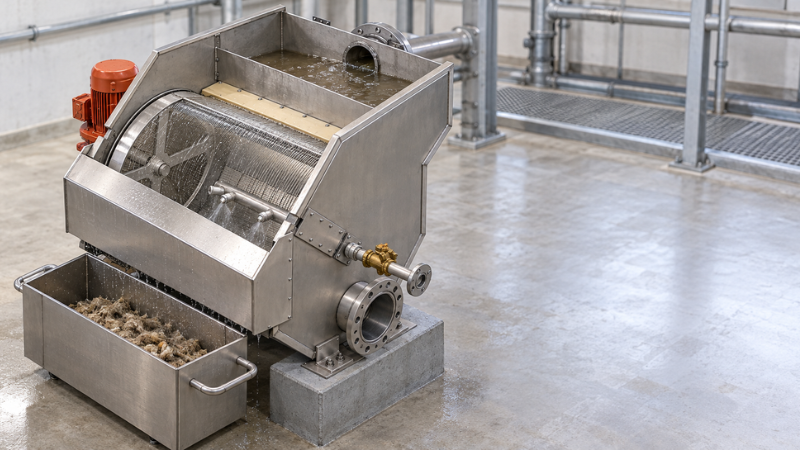
Stainless steel is widely used for industrial sluice gates because of its excellent corrosion resistance and long service life. The chromium content in stainless steel forms a protective surface layer that helps resist oxidation and corrosion.
Stainless steel sluice gates are particularly suitable for wastewater, chemical processing, marine environments, and facilities exposed to high humidity.
Common stainless steel grades include:
Stainless steel 304 for general industrial applications
Stainless steel 316 for chloride-containing environments
Stainless steel 316L for improved weld corrosion resistance
Duplex stainless steel for higher strength and severe environments
The correct grade should always be selected based on the chemical and environmental conditions.
Key advantages include:
High corrosion resistance
Long operational life
Low maintenance requirements
Good mechanical strength
Clean and hygienic surface
Stainless steel can have a higher initial cost than conventional materials. However, the longer service life and reduced maintenance requirements can make stainless steel cost-effective for demanding industrial applications.
2. Why Is Cast Iron Still Used for Water Control Gates?
Cast iron has been used in water control equipment for decades because it offers high compressive strength and good dimensional stability. Cast iron sluice gates remain suitable for many conventional water and wastewater applications.
A properly protected cast iron sluice gate can perform reliably in non-aggressive environments. Protective coatings are commonly applied to reduce corrosion.
Cast iron is often selected when:
The water is not highly corrosive
The installation requires a rigid gate structure
Initial equipment cost is an important consideration
Standard municipal or industrial water control is required
The main limitation of cast iron is corrosion. Unprotected or damaged surfaces may deteriorate when continuously exposed to moisture, aggressive wastewater, or chemicals.
How Does Cast Iron Compare With Stainless Steel?
The choice between stainless steel and cast iron depends largely on operating conditions.
Factor | Stainless Steel | Cast Iron |
Corrosion resistance | Excellent | Moderate with coating |
Initial cost | Higher | Lower |
Maintenance | Lower | Higher in corrosive conditions |
Service life | Long | Long in suitable environments |
Chemical resistance | High, depending on grade | Limited |
Structural rigidity | High | High |
For aggressive environments, stainless steel generally provides better long-term protection. For conventional applications with controlled corrosion conditions, coated cast iron can remain a cost-effective choice.
3. Why Is Ductile Iron Suitable for High-Strength Applications?
Ductile iron is a modified form of cast iron with improved tensile strength and impact resistance. The material is commonly used when a water control gate requires greater mechanical strength than conventional cast iron can provide.
The graphite structure in ductile iron gives the material greater toughness. This makes ductile iron suitable for applications involving mechanical loads, pressure variations, or larger gate sizes.
Ductile iron can offer several advantages:
Higher tensile strength than conventional cast iron
Improved impact resistance
Good dimensional stability
Lower cost than many stainless steel grades
Suitable for large and heavy gate structures
However, ductile iron still requires proper corrosion protection in wet or chemically aggressive environments. Protective coatings should be selected according to the application.
Ductile iron is often suitable for heavy-duty water infrastructure where structural strength is a primary requirement.
4. When Is Aluminium Suitable for a Sluice Gate?
Aluminium is lightweight and naturally forms a protective oxide layer that provides resistance against atmospheric corrosion. Aluminium sluice gates can be useful where reducing structural weight is important.
The lower weight of aluminium can simplify installation and operation, particularly for manually operated gates. Aluminium can also be suitable for certain outdoor and freshwater environments.
The main advantages of aluminium include:
Low structural weight
Good atmospheric corrosion resistance
Easy handling during installation
Good fabrication properties
Lower operating force in some gate designs
However, aluminium may not be suitable for every industrial environment. Certain chemicals can damage the protective oxide layer and cause accelerated corrosion.
Aluminium can also have lower mechanical strength than steel in demanding applications. The material should therefore be evaluated carefully for pressure, loading, and chemical exposure.
5. Why Is Carbon Steel Used in Custom Sluice Gate Construction?
Carbon steel offers high mechanical strength and flexibility in fabrication. It can be suitable for large custom-designed sluice gates where structural requirements are more demanding.
Carbon steel can be fabricated into complex gate frames, structural members, and large water control assemblies. The material is also widely available and often cost-effective for large industrial projects.
Its key advantages include:
High structural strength
Good fabrication flexibility
Cost-effective availability
Suitable for custom dimensions
Easy integration with structural systems
The main concern with carbon steel is corrosion. Bare carbon steel can deteriorate rapidly when exposed to water and oxygen.
For water control applications, carbon steel generally requires a suitable protective system. Depending on the environment, this may include industrial coatings, epoxy protection, or other corrosion-control methods.
How Does a Sluice Gate Perform in Harsh Chemical Environments?
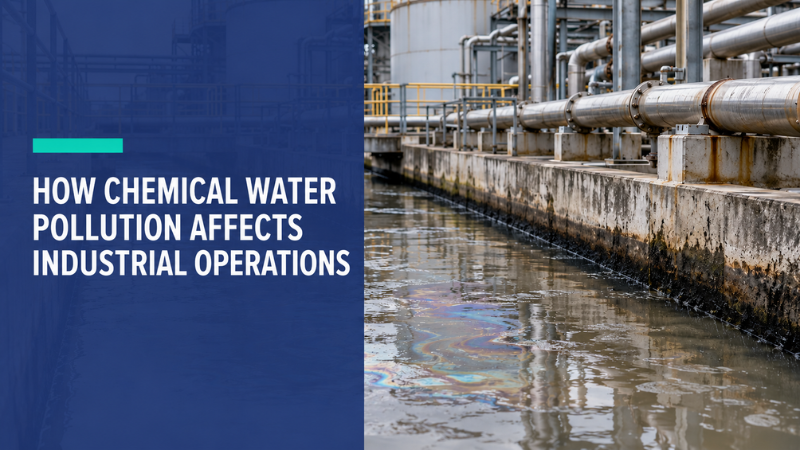
Chemical exposure is one of the most important considerations when selecting a sluice gate material. Industrial wastewater may contain acids, alkalis, chlorides, solvents, oils, suspended solids, or other corrosive substances.
The material should be selected based on the actual chemical composition rather than assuming that all wastewater behaves similarly.
Why Are Chlorides a Major Concern?
Chlorides can accelerate corrosion and may cause localized damage such as pitting or crevice corrosion. Marine water, coastal installations, and some industrial wastewater streams may contain elevated chloride levels.
Stainless steel 316 generally provides better chloride resistance than stainless steel 304. However, very high chloride concentrations may require more corrosion-resistant materials.
The temperature of the process fluid can also affect corrosion behaviour.
How Should Material Compatibility Be Evaluated?
Material selection should begin with a clear understanding of the process conditions. The following information is particularly important:
A sluice gate that performs well in neutral water may not provide the same service life in acidic or chemically aggressive wastewater.
How Do Material Costs Affect Long-Term Sluice Gate Economics?
The cheapest sluice gate material is not always the most cost-effective choice. Long-term industrial applications should consider lifecycle cost rather than purchase price alone.
Lifecycle cost can include:
Initial equipment cost
Installation cost
Corrosion protection
Maintenance requirements
Replacement components
Production downtime
Equipment replacement
Why Can Stainless Steel Have a Lower Lifecycle Cost?
Stainless steel may have a higher initial price, but its corrosion resistance can reduce maintenance and replacement requirements. This can make stainless steel particularly cost-effective in environments where equipment access is difficult or downtime is expensive.
A longer service life can also reduce the frequency of major equipment replacement.
When Can Cast Iron or Ductile Iron Be More Economical?
Cast iron and ductile iron can offer a lower initial cost for applications with controlled operating conditions. When protective coatings are maintained properly, these materials can provide reliable service in suitable water control environments.
The most economical choice depends on the balance between:
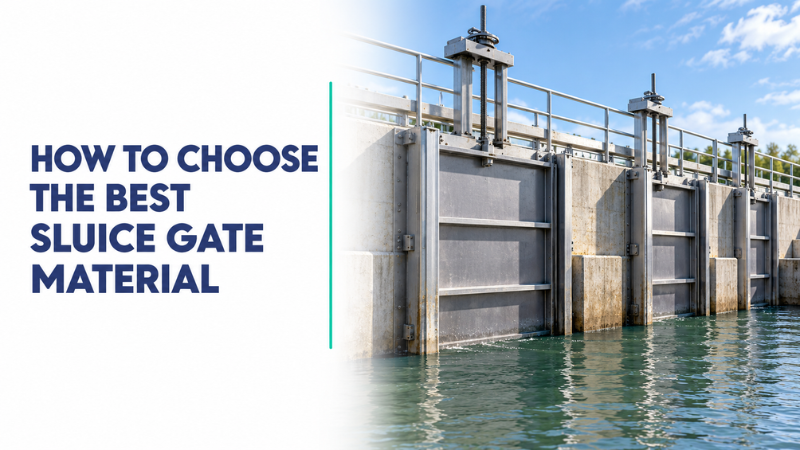
How Should You Choose the Right Sluice Gate Material?
The right sluice gate material should match the actual application rather than following a one-material approach. Process conditions, environmental exposure, and maintenance expectations should all be considered.
A practical selection process should include the following steps:
Analyse the fluid by identifying water chemistry, pH, chlorides, and suspended solids.
Define operating conditions by considering pressure, temperature, and installation location.
Evaluate corrosion exposure by identifying continuous, intermittent, or atmospheric exposure.
Compare mechanical requirements by reviewing gate size, loading, and structural demands.
Estimate lifecycle cost by considering maintenance, downtime, and replacement costs.
Check material compatibility with all process chemicals and cleaning agents.
A sluice gate installed in a freshwater canal may require a very different material from a sluice gate used to isolate chemically treated industrial wastewater.
What Other Components Should Be Considered Along With Gate Material?
The gate body material is only one part of overall sluice gate performance. Other components should also be suitable for the operating environment.
Why Are Seals Important?
Seals help control leakage around the gate perimeter. Seal materials must remain compatible with the fluid, operating temperature, and pressure conditions.
A corrosion-resistant gate with an incompatible seal can still experience leakage or premature failure.
Why Does Stem Material Matter?
The operating stem transfers motion from the actuator or manual mechanism to the gate. Stem corrosion can affect smooth operation and may increase the force required to open or close the sluice gate.
Stainless steel is commonly used for stems because of its strength and corrosion resistance.
How Does Surface Protection Affect Service Life?
Coatings can significantly improve the corrosion resistance of carbon steel, cast iron, and ductile iron. The coating system should be compatible with the water, wastewater, and chemical environment.
Surface preparation is equally important. Poor surface preparation can reduce coating adhesion and shorten the effective life of the protection system.
How Can the Correct Material Improve Industrial Water Control?
Material selection affects the reliability and long-term performance of a sluice gate. A properly selected material can reduce corrosion-related failures, maintenance requirements, and unexpected operational downtime.
The best material depends on the balance between environmental conditions and lifecycle cost. There is no single material that provides the best performance in every application.
For example, stainless steel may be preferable in corrosive wastewater environments, while coated cast iron may be suitable for conventional water control. Ductile iron may offer additional strength for heavy-duty installations, while aluminium can provide advantages where lower structural weight is important.
For related information, see [Internal Link: Understanding Different Types of Water Control Gates] and [Internal Link: How Industrial Water Control Systems Manage Flow].
Conclusion
Choosing the right sluice gate material is essential for reliable industrial water control. Stainless steel offers strong corrosion resistance and low maintenance requirements, while cast iron and ductile iron can provide cost-effective strength in suitable environments. Aluminium offers weight advantages, and carbon steel provides flexibility for large custom structures but requires effective corrosion protection. The best material should be selected by evaluating fluid chemistry, corrosion exposure, mechanical loads, and lifecycle cost. A well-matched sluice gate material can improve operational reliability, extend service life, and reduce long-term maintenance and replacement requirements.
FAQs
Q1. What is the best material for a sluice gate?
A: The best sluice gate material depends on the application. Stainless steel is often preferred for corrosive water and wastewater, while cast iron or ductile iron may be more cost-effective for conventional water control.
Q2. Is stainless steel better than cast iron for sluice gates?
A: Stainless steel generally provides better corrosion resistance and requires less maintenance in harsh environments. Cast iron can be a practical and economical choice when the water is non-aggressive and suitable protective coatings are maintained.
Q3. Which stainless steel grade is used for industrial sluice gates?
A: Stainless steel 304 and 316 are commonly used for industrial water control gates. Grade 316 generally offers improved resistance to chloride-containing and more corrosive environments compared with grade 304.
Q4. Can a carbon steel sluice gate be used in water applications?
A: Yes, a carbon steel sluice gate can be used when an appropriate corrosion-protection system is applied. Protective coatings are essential because untreated carbon steel can corrode rapidly in wet environments.
Q5. What factors affect sluice gate material selection?
A: Sluice gate material selection depends on fluid chemistry, pH, chlorides, temperature, pressure, abrasion, and maintenance requirements. Lifecycle cost should also be considered rather than evaluating only the initial purchase price.
Q6. How long can a properly selected sluice gate last?
A: Service life depends on the material, operating conditions, maintenance, and corrosion exposure. A properly selected and maintained industrial sluice gate can provide long-term service, while an unsuitable material may experience premature corrosion or failure.