Wastewater and water treatment solve opposite problems. Water treatment cleans raw source water so it is safe to drink or use, while wastewater treatment cleans used water so it is safe to discharge or reuse.
The two share some equipment and a few unit processes, which is where the confusion starts. Sedimentation and chemical coagulation show up in both. But the incoming load is very different. A river intake carries silt and microorganisms. A sewer or an industrial drain carries rags, grit, grease, oil and dissolved organics at far higher concentrations.
Three points shape everything below. The first stage of each train is built around a different contaminant. Industrial wastewater usually needs treatment at source before it reaches a municipal plant or a river. And the right method is chosen backwards, from the standard the treated water must meet to the contaminant that stands in the way.
How do primary processes compare in wastewater and water treatment?
Primary treatment in a wastewater plant removes what settles or floats on its own. The closest equivalent in a water plant removes fine particles that only settle once a chemical binds them together. Both rely on gravity, aimed at very different material.
What happens at the front of a wastewater plant?
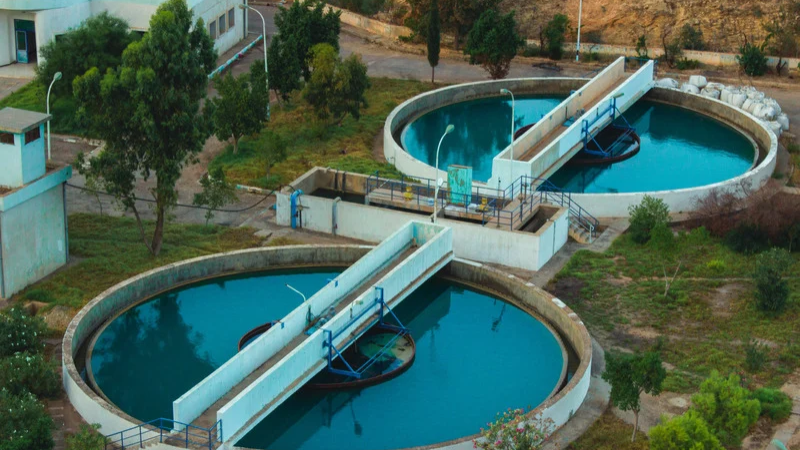
Wastewater first passes through preliminary treatment. The US EPA describes screens with bar openings of about half an inch that catch rags, cans and sticks before they clog pumps and pipework. A grit chamber follows, where sand and small stones settle out before they wear pumps or take up tank volume.
Primary sedimentation comes next. The flow slows in a clarifier, settleable solids sink as primary sludge, and grease and oil rise into a scum layer that has to be skimmed off. Design guidance for efficiently run primary sedimentation tanks gives these removal ranges:
Suspended solids removal: 50–65%
BOD removal: 25–40%
Primary sedimentation cannot touch dissolved organic matter or very fine particles. Those pass through to secondary treatment.
What is the equivalent stage in a water treatment plant?
Drinking water plants rarely see rags or grit in meaningful quantity, so the train starts differently. The CDC lists the typical sequence for community water systems as follows:
Coagulation, where a chemical destabilizes fine particles
Flocculation, gentle mixing that builds those particles into heavier floc
Sedimentation, where the floc settles out
Filtration through sand, gravel or charcoal
Disinfection with chlorine, ozone or UV light
Sedimentation appears in both trains. In a water plant, though, it removes floc the plant itself created, and there is rarely a floating oil or scum layer to manage.
Aspect | Wastewater primary treatment | Water treatment clarification |
|---|
Main target | Settleable solids, floating grease and oil | Fine particles and turbidity |
Chemicals | Not routinely used at this stage | Coagulant added before settling |
Surface layer | Scum and oil, skimmed off | Rarely present |
What follows | Biological secondary treatment | Filtration and disinfection |
How do industrial and municipal wastewater treatment approaches differ?
Municipal plants treat domestic sewage whose make-up is broadly predictable. Industrial plants treat whatever their process produces, and that varies by sector and sometimes by shift. Most design differences follow from that.
How does a municipal plant work?
After primary treatment, a municipal plant relies on biological secondary treatment. Bacteria consume dissolved organic matter in activated sludge tanks, trickling filters or similar systems. According to the EPA, secondary processes can remove up to 90 percent of the organic matter in wastewater.
Biology is also the weak point. The same EPA guidance warns that toxic compounds from industrial discharges can impair activated sludge unless those discharges are controlled through pretreatment.
What changes in industrial wastewater?
Industrial effluent often carries contaminants a municipal plant was never sized for. A refinery or tank farm produces oily water. A machining plant produces spent coolant. Dairies, sugar mills and food processors send out high-strength organic loads with fats and grease.
So industrial sites usually treat at source. In India, Schedule VI of the Environment (Protection) Rules, 1986 sets general discharge limits that depend on where the effluent goes:
Oil and grease: 10 mg/L to inland surface water, 20 mg/L to public sewers
Suspended solids: 100 mg/L to inland surface water, 600 mg/L to public sewers
BOD (3 days at 27°C): 30 mg/L to inland surface water, 350 mg/L to public sewers
The sewer limits are looser because a municipal plant will treat the flow further. They are still limits. Oil and grease is held to 20 mg/L even into a sewer, and a site discharging straight to a river or drain has to reach the tighter column on its own. State pollution control boards can also prescribe stricter limits for an individual site.
How do you choose the right treatment method?
Choose a treatment method by working backwards. Fix the standard the treated water has to meet, identify what stops you meeting it, then pick the process that removes that contaminant. Starting from a technology and hoping it fits is the usual route to a mismatched plant.
The sequence below applies to both water and wastewater, though each step is answered differently.
Confirm whether you are treating water for use or wastewater for discharge or reuse.
Fix the target standard, such as IS 10500 for drinking water or the discharge consent for effluent.
Characterize the stream for settleable solids, free oil, emulsified oil, dissolved organics and metals.
Match each contaminant to the stage that removes it, with physical separation ahead of biological or chemical stages.
Check how far flow and load swing between shifts, seasons and storm events.
Plan where screenings, grit, sludge and recovered oil will go.
For drinking water, the target is explicit. IS 10500:2012 sets turbidity limits of:
Turbidity, acceptable limit: 1 NTU
Turbidity, permissible limit in the absence of an alternate source: 5 NTU
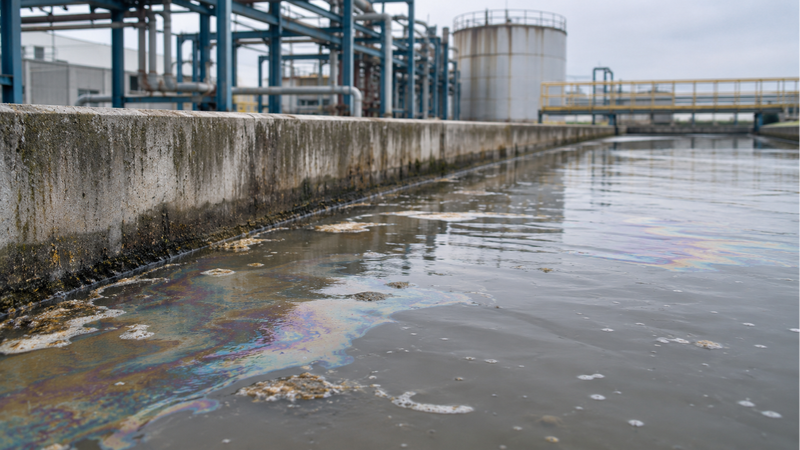
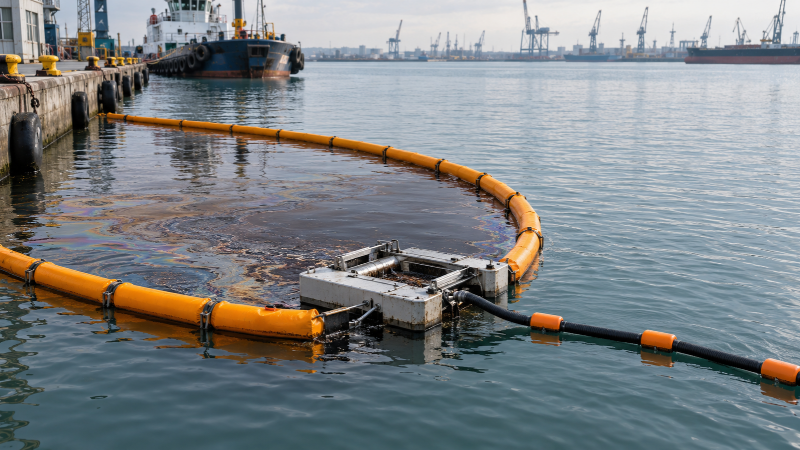
For oily wastewater, step 4 carries the most risk. Gravity oil–water separators designed to API Publication 421 target free oil droplets of 150 µm and larger. Smaller droplets and emulsified oil pass through and need a further stage. A specification that assumes all the oil is free oil will undersize the train.
Physical removal belongs at the front. Coarse solids, grit and free oil are easiest to take out while they still settle or float on their own, and every downstream stage, whether biological, chemical or membrane-based, behaves more predictably once they are gone.
Conclusion
Wastewater and water treatment move water in opposite directions, one making source water fit for use and the other making used water fit for discharge. Both use gravity sedimentation. Primary wastewater treatment targets settleable solids, grease and oil, while water treatment clarifies fine particles after coagulation. Municipal plants depend on biological secondary treatment and on industries pretreating what they send to the sewer. In India, Schedule VI limits tighten sharply when effluent goes to surface water rather than a public sewer. Choosing a method starts with the standard you must meet and the contaminant that blocks you, with physical separation of solids and free oil placed first.
FAQs
Q1. What is the main difference between water treatment and wastewater treatment?
A: Water treatment makes raw water from rivers, reservoirs or wells safe to drink or use. Wastewater treatment cleans water after use so it can be discharged or reused within discharge limits. The two share some processes but handle very different contaminant loads.
Q2. What does primary wastewater treatment remove?
A: Primary wastewater treatment removes settleable solids by gravity and skims off floating grease, oil and scum. Efficiently run primary sedimentation tanks remove about 50–65% of suspended solids and 25–40% of BOD. Dissolved organics pass through to secondary treatment.
Q3. Why does industrial wastewater need pretreatment before a municipal plant?
A: Industrial effluent can carry oil, toxic compounds or high-strength organics that a municipal biological process was not designed for. The US EPA notes that toxic industrial compounds can impair activated sludge unless discharges are controlled. Pretreatment at source protects the municipal plant and its own compliance.
Q4. What are the oil and grease discharge limits in India?
A: Under Schedule VI of the Environment (Protection) Rules, 1986, the general oil and grease limit is 10 mg/L for discharge to inland surface water and 20 mg/L for discharge to public sewers. State pollution control boards can prescribe stricter limits for an individual site.
Q5. Can a gravity oil–water separator remove all oil from wastewater?
A: No. A gravity oil–water separator designed to API Publication 421 targets free oil droplets of 150 µm and larger. Smaller droplets and emulsified oil are not reliably removed and need a further treatment stage downstream.