How marine oil spills impact coastal ecosystems depends on spill size, weather, habitat type, and cleanup speed; the main effects are habitat smothering, toxic exposure, and food-web disruption. The first signs are usually dead zones in shallow water, stressed wildlife, and contamination that spreads beyond the slick itself. Over time, the damage can reach biodiversity, fisheries, tourism, and public budgets.
What immediate environmental damage do marine oil spills cause?
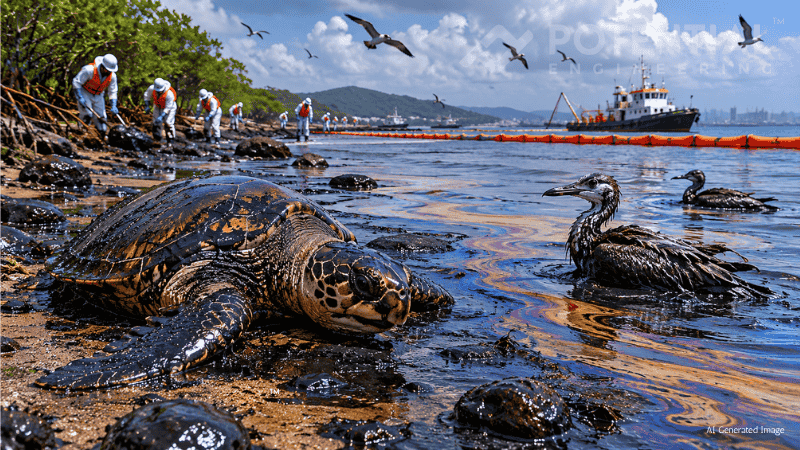
The biggest early problem is direct contact: oil coats shorelines, plants, birds, eggs, and feeding grounds before natural breakdown can begin.
Why do shorelines and marshes get hit first?
Shallow coastal zones act like traps for oil. Wind, tides, and currents push floating oil toward mangroves, marshes, mudflats, seagrass beds, and coral-fringed shorelines, where the oil can linger and smother habitat.
In these areas, oil blocks sunlight, coats roots and leaves, and reduces the exchange of oxygen and nutrients in sediments. That matters because coastal plants are not just background scenery; they stabilize shorelines, support nurseries for fish, and buffer erosion.
How do oil spills harm birds, fish, and marine mammals right away?
Oil harms wildlife in two main ways: physical coating and toxic exposure. Birds can lose waterproofing and insulation when oil gets on feathers, while marine mammals can suffer because oil damages fur, skin, and breathing conditions at the surface.
Fish and other animals are also affected when they inhale or ingest toxic compounds in the water. NOAA notes that these compounds can cause severe health problems, including heart damage, stunted growth, immune system effects, and death.
Why does cleanup itself sometimes add stress?
Cleanup is necessary, but it can disturb habitats that are already fragile. Heavy machinery, shoreline washing, and containment activities can compact sediments, crush vegetation, and disturb nesting or feeding areas if the response is not carefully managed.
That is why oil spill response is always a trade-off. Responders must remove oil fast, but they also need to avoid turning a pollution event into a habitat-destruction event.
How Marine Oil Spills Impact Coastal Ecosystems Over the Long Term?
Long-term damage shows up in reproduction, population recovery, food-web balance, and the slow return of habitats that were contaminated below the surface.
Why do food webs change after a spill?
Oil does not only kill individual organisms. It can reduce plankton, invertebrates, juvenile fish, and shellfish that form the base of coastal food webs, which then affects predators higher up the chain.
When the base of the food web weakens, the ecosystem can become less resilient. That means the system may recover more slowly from storms, heat stress, or later pollution events because fewer species are available to fill ecological roles.
Why do recovery times vary across habitats?
Different coastal habitats recover at different speeds. Rocky shorelines may shed oil faster than sheltered marshes, while coral reefs and deep sediment systems can hold contamination longer because recovery depends on slow biological growth and complex reef interactions.
Corals are especially vulnerable because oil can kill them or interfere with reproduction, growth, behavior, and development. If a spill occurs during spawning, eggs and sperm can be damaged before fertilization even happens.
What does a real-world spill teach us?
Long-term monitoring after the Deepwater Horizon spill showed that ecological effects can last for years. NOAA reported severe declines in several cetacean groups in the Gulf, including up to 83% decline in beaked whales at monitored sites, showing that spill impacts can persist long after surface cleanup ends.
Observed cetacean density decline: up to 83%.
That example matters because it proves the main lesson of marine spill science: surface cleanup is only the beginning, not the end, of ecological recovery.
Why do oil spills create economic consequences for coastal communities?
Coastal economies often depend on fisheries, aquaculture, tourism, ports, and beach use, so ecological damage quickly becomes financial damage.
How are fisheries and aquaculture affected?
Oil spills can close fishing grounds, contaminate seafood, and damage spawning or nursery areas. UNEP notes that fisheries are among the resources negatively affected by oil spills, and that coastal communities can lose income when marine habitats and wildlife are harmed.
Even when fish are not directly killed, market confidence can drop. Buyers may avoid seafood from affected regions because of contamination fears, monitoring delays, or regulatory restrictions, which stretches the economic impact well beyond the spill zone.
How does tourism lose revenue after a spill?
Tourism depends on clean water, healthy wildlife, and usable beaches. UNEP states that oil spills negatively affect recreational activities, and beach cleanup costs can rise sharply when shorelines are coated with oil.
A polluted coastline can lose visitors in a single season, but recovery of public trust can take far longer. That gap between physical cleanup and reputation recovery is one reason oil spills hit coastal economies so hard.
Why do public agencies face higher costs?
Governments usually pay for emergency response, shoreline cleanup, wildlife rescue, environmental monitoring, and long-term restoration. UNEP highlights the cost of cleanup as a major part of spill damage, and the bill often continues after the visible oil is gone.
That means the total economic burden is not just lost revenue. It also includes public spending on recovery, scientific surveys, habitat restoration, and future risk reduction.
How do scientists track spill recovery over time?
Recovery studies help scientists separate short-term shock from long-term ecosystem change.
What indicators are usually monitored?
Scientists often track a mix of biological and chemical indicators, including:
wildlife mortality and reproduction rates,
shoreline and sediment contamination,
coral or seagrass health,
fish abundance and recruitment, and
long-term shifts in predator and prey populations.
These indicators matter because coastal ecosystems are connected. A change in one species or habitat often signals wider stress across the ecosystem, not just a single local problem.
Conclusion
How marine oil spills impact coastal ecosystems can be summarized in three blunt truths: the damage starts fast, the ecological effects can last for years, and the economic fallout reaches far beyond the shoreline. Immediate harm often includes coated habitats, poisoned wildlife, and disrupted feeding grounds. Long-term harm can weaken biodiversity, slow recovery, and alter food webs in ways that are hard to reverse. Coastal communities also absorb real financial losses through fishing disruption, tourism declines, cleanup costs, and public restoration spending. Understanding these impacts is essential for building better oil spill response, stronger prevention planning, and more resilient coastal management.
Frequently Asked Questions (FAQs)
Q1. What is the biggest immediate effect of a marine oil spill on coastal ecosystems?
A: The biggest immediate effect is physical contamination of shoreline habitats and wildlife. Oil can coat birds, smother plants, and poison organisms in shallow coastal water within hours or days.
Q2. How long do oil spill impacts last in marine biodiversity?
A: The timeline varies by habitat, but impacts can last for years or even longer in sensitive ecosystems. NOAA monitoring after major spills has shown long-term declines in marine mammals and other wildlife, proving that recovery is not always quick.
Q3. Why are marshes and coral reefs so vulnerable to oil spills?
A: Marshes trap oil in sediments and around roots, while coral reefs are sensitive to toxicity, reproduction failure, and habitat disruption. Both ecosystems are biologically rich and recover slowly once damaged.
Q4. How do oil spills hurt coastal economies?
A: Oil spills reduce income from fisheries, aquaculture, and tourism while increasing cleanup and monitoring costs. Coastal communities often face both direct losses and long-term reputation damage after a spill.
Q5. Can ecosystems fully recover after an oil spill?
A: Some ecosystems recover well, but full recovery is not guaranteed. Recovery depends on spill size, habitat type, weather conditions, and how much of the food web was damaged in the first place.