A submersible dredging vehicle is an underwater machine designed to remove accumulated sediment, sludge, sand, and other deposited materials from the bottom of water bodies without requiring extensive surface-based excavation. These vehicles improve dredging accuracy, minimize environmental disturbance, and enable efficient sediment removal in locations that are difficult for conventional dredging equipment to access. Understanding how a submersible dredging vehicle works helps engineers and plant operators choose the right dredging approach for different industrial and environmental applications.
Sediment naturally accumulates in reservoirs, lagoons, settling basins, mining ponds, harbors, and industrial water bodies. If left unmanaged, sediment buildup can reduce storage capacity, obstruct water flow, interfere with industrial operations, and increase maintenance requirements. A submersible dredging vehicle provides a targeted method for removing these deposits while operating directly on the underwater surface.
What Is a Submersible Dredging Vehicle?
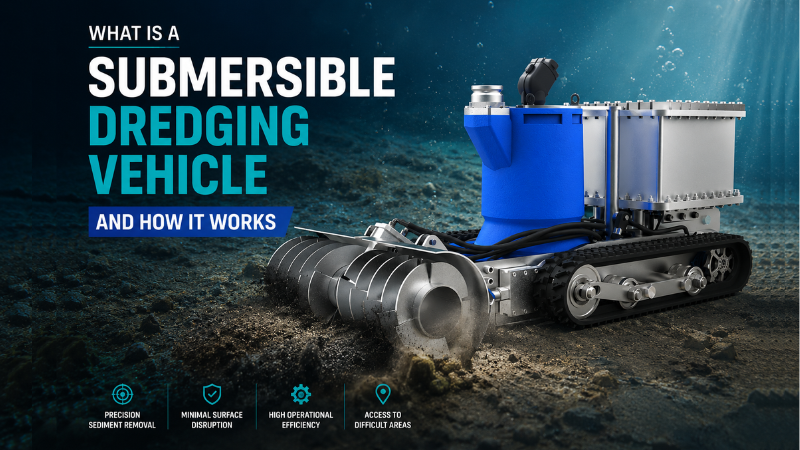
A submersible dredging vehicle is a self-propelled or remotely operated underwater machine that travels across the bottom of a water body while collecting sediment for transport through a pumping system. Unlike floating dredgers that operate from the water surface, a submersible dredging vehicle performs excavation directly at the sediment layer.
The vehicle combines mobility, underwater excavation, and hydraulic pumping into a single system. Depending on the application, the collected material may be transported through pipelines to dewatering facilities, settling ponds, or designated disposal areas.
This approach is especially valuable where maintaining water levels is important or where surface access is limited.
Why Is Sediment Removal Important?
Sediment accumulation affects both operational efficiency and environmental performance. Regular sediment removal helps maintain designed storage volumes and supports uninterrupted industrial processes.
Common problems caused by excessive sediment include:
Reduced reservoir or lagoon capacity
Blocked water intake structures
Lower pumping efficiency
Increased risk of flooding
Reduced treatment performance in settling basins
Navigation challenges in ports and waterways
In industrial facilities, accumulated sludge can also reduce process efficiency and increase equipment wear over time.
What Are the Core Components of a Submersible Dredging Vehicle?
A submersible dredging vehicle consists of several integrated systems that work together to excavate and transport underwater material.
Mobility System
The mobility system enables the vehicle to travel across uneven underwater terrain.
Depending on operating conditions, the vehicle may use:
Crawler tracks are commonly used because they distribute weight evenly and provide good traction on soft sediment.
Cutter or Excavation Head
The excavation head loosens compacted sediment before pumping begins.
Different cutter designs are selected based on sediment characteristics, including:
Soft sludge
Sand
Clay
Consolidated silt
Fine industrial deposits
Some applications use augers or rotary cutters, while others rely on suction-only systems for loose materials.
Hydraulic Pump
The hydraulic dredge pump transports excavated material through discharge pipelines.
Key operating factors include:
Flow rate:
Varies by system design
Maximum solids concentration:
Depends on sediment characteristics
Discharge distance:
Depends on pump capacity and pipeline configuration
The pump is typically positioned close to the excavation point to improve efficiency and reduce clogging.
Control System
Modern submersible dredging vehicles are commonly operated remotely.
The control system may include:
These technologies allow operators to monitor dredging performance while maintaining safe working conditions.
How Does a Submersible Dredging Vehicle Work?
A submersible dredging vehicle follows a systematic excavation process to remove underwater deposits efficiently.
Step 1: Site Survey
Engineers first evaluate sediment depth, composition, water depth, and required dredging volume.
Bathymetric surveys and sonar mapping help identify the areas with the highest sediment accumulation.
Step 2: Vehicle Deployment
The vehicle is lowered into the water using cranes, ramps, or launch systems, depending on its size.
Once submerged, operators perform functional checks before excavation begins.
Step 3: Underwater Navigation
The vehicle travels across the planned dredging area using pre-defined routes.
Remote monitoring systems continuously track vehicle location, operating depth, and production progress.
Step 4: Sediment Excavation
The cutter head loosens compacted material while the suction system immediately collects the sediment-water mixture.
Maintaining a consistent excavation depth helps achieve uniform dredging results.
Step 5: Hydraulic Transport
The dredged slurry moves through discharge pipelines to processing or disposal locations.
Depending on project requirements, transported material may undergo:
Step 6: Continuous Monitoring
Operators continuously monitor:
Continuous monitoring helps maintain stable performance while reducing the likelihood of equipment downtime.
Where Are Submersible Dredging Vehicles Used?
Submersible dredging vehicles are used across multiple industries where underwater sediment accumulation affects operational efficiency.
Reservoirs and Dams
Sediment gradually reduces water storage capacity in reservoirs.
Periodic underwater dredging helps restore usable storage volume without draining the reservoir.
Industrial Settling Ponds
Many manufacturing facilities use settling ponds to separate suspended solids from wastewater.
Removing accumulated sludge maintains treatment efficiency and prevents excessive buildup.
Mining Operations
Mining sites often generate tailings and fine sediment that settle in storage ponds.
A submersible dredging vehicle enables controlled sediment removal while minimizing disruption to ongoing operations.
Wastewater Treatment Plants
Large treatment plants accumulate sludge in clarifiers, lagoons, and equalization basins.
Scheduled dredging supports efficient plant performance and extends infrastructure life.
Ports, Harbors, and Navigation Channels
Sediment deposition can reduce navigable water depth.
Underwater dredging helps maintain safe vessel movement while minimizing interruptions to port operations.
Power Plants and Cooling Water Systems
Cooling water reservoirs and intake structures can experience sediment accumulation over time.
Regular sediment removal supports reliable water circulation and protects intake infrastructure.
What Advantages Does a Submersible Dredging Vehicle Offer Over Traditional Dredging Methods?
A submersible dredging vehicle provides several operational advantages compared with conventional surface dredging equipment.
Higher Precision
Operating directly on the sediment layer allows accurate excavation with reduced over-dredging.
This precision is particularly useful in confined industrial basins and engineered water bodies.
Reduced Water Level Disruption
Many dredging projects can proceed without draining the entire water body.
Maintaining normal water levels minimizes operational interruptions and reduces project complexity.
Better Access to Difficult Locations
Submersible systems can reach:
These environments may be difficult for larger floating dredgers to access effectively.
Lower Surface Congestion
Because much of the equipment remains underwater, fewer support vessels may be required at the surface.
This can simplify operations in busy industrial facilities or navigation areas.
Continuous Operation
Many systems are designed for extended operating periods with continuous sediment transport.
Continuous dredging can improve project efficiency where large sediment volumes must be removed.
What Factors Influence Dredging Performance?
Several variables determine how efficiently a submersible dredging vehicle removes sediment.
Important considerations include:
Sediment density and composition
Water depth
Required dredging accuracy
Pump capacity
Pipeline length
Discharge elevation
Underwater obstacles
Weather and water conditions
Careful planning helps optimize productivity while reducing equipment wear and operational delays.
What Maintenance Does a Submersible Dredging Vehicle Require?
Routine maintenance helps ensure reliable operation and extends equipment service life.
Typical maintenance activities include:
Inspecting hydraulic systems
Checking cutter wear
Monitoring pump impeller condition
Examining crawler tracks
Verifying electrical connections
Cleaning sensors and cameras
Testing remote-control systems
Preventive maintenance also reduces the risk of unexpected downtime during long-duration dredging projects.
How Is Technology Improving Modern Underwater Dredging Equipment?
Advancements in automation and digital monitoring continue to improve underwater dredging equipment.
Modern systems increasingly incorporate:
Real-time sonar mapping
Automated depth control
Remote operation over long distances
Predictive maintenance monitoring
Integrated production reporting
Digital project mapping
These technologies improve operational visibility while helping operators achieve more consistent sediment removal results.
Conclusion
A submersible dredging vehicle provides an efficient method for removing underwater sediment from reservoirs, industrial ponds, wastewater facilities, mining operations, and navigation channels. By combining underwater mobility, precision excavation, and hydraulic transport, these machines help restore storage capacity, maintain water flow, and support reliable industrial operations without extensive surface disruption. Understanding the core components, operating mechanism, industrial applications, and advantages over traditional dredging methods allows engineers and facility managers to make informed decisions when planning sediment removal projects. As automation, remote monitoring, and underwater sensing technologies continue to evolve, submersible dredging vehicles are becoming increasingly capable of delivering accurate, efficient, and environmentally responsible sediment management.
FAQs
Q1. What is a submersible dredging vehicle used for?
A: A submersible dredging vehicle is used to remove accumulated sediment, sludge, sand, and silt from the bottom of reservoirs, industrial ponds, wastewater treatment facilities, mining sites, and navigation channels.
Q2. How does a submersible dredging vehicle differ from traditional dredging equipment?
A: A submersible dredging vehicle works directly on the sediment layer. This approach improves excavation accuracy, provides better access to confined or deep locations, and often reduces the need to lower water levels during dredging.
Q3. What types of sediment can a submersible dredging vehicle remove?
A: Depending on the cutter and pumping system, a submersible dredging vehicle can remove soft sludge, silt, sand, clay, mining tailings, and other settled industrial deposits. Equipment selection depends on sediment density, particle size, and project requirements.
Q4. Which industries commonly use underwater dredging equipment?
A: Underwater dredging equipment is widely used in water and wastewater treatment, mining, hydropower, ports and harbors, industrial process plants, and reservoir maintenance.
Q5. What factors affect the efficiency of sediment removal?
A: The efficiency of sediment removal depends on sediment composition, water depth, pump capacity, excavation depth, discharge distance, and pipeline design. Proper planning, routine maintenance, and continuous monitoring help maximize dredging performance.