Textile wastewater is difficult to treat because it carries dyes, salts, surfactants, and fluctuating organic load together. A robust textile industry effluent treatment system must handle color, toxicity, and process instability at the same time.
What Pollutants Are Found In Textile Wastewater?
Textile wastewater is not a single-type waste stream. It changes with each production stage, from fiber preparation to dyeing and finishing.
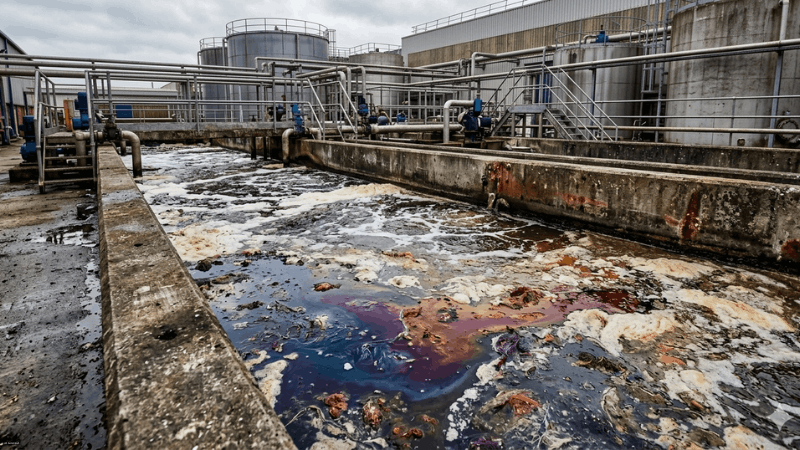
The result is a mixed effluent that often contains both visible contaminants and dissolved pollutants. That mix makes wastewater treatment far more complex than treating a normal industrial discharge.
Dyes and color bodies
Dyes are the most visible problem because they give the effluent a strong color. Many reactive, azo, and disperse dyes are designed to stay stable on fabric, which also makes them hard to remove from water.
These compounds may remain in the wastewater even at low concentrations. The water can look highly polluted long before standard treatment reaches an acceptable level.
Organic load and processing chemicals
Textile effluent often contains sizing agents, starch, detergents, wetting agents, softeners, and finishing chemicals. These raise chemical oxygen demand (COD) and increase treatment load.
Some of these compounds are readily biodegradable. Others resist breakdown and continue to stress the treatment system.
Salts, pH swings, and trace metals
Salt levels are often high in dyeing operations, especially when fixation efficiency is low. pH may also swing sharply depending on the process batch.
In some cases, trace metals from dyes and auxiliaries can appear in the wastewater. That creates an extra layer of concern for discharge and reuse.
Why Is Color Removal A Major Challenge?
Color removal is one of the hardest parts of treating textile effluent because dye molecules are built to resist change. They are often chemically stable, water-soluble, and hard for microorganisms to break down.
Even when the wastewater becomes less toxic, the color can remain visible. That means treatment may look incomplete even if some pollutants are already reduced.
Why dyes resist breakdown
Many dyes have complex molecular structures with aromatic rings and strong bonds. These structures do not break easily during ordinary biological treatment.
Some dyes also behave differently depending on pH, salt concentration, and temperature. So the same treatment train may work well one day and perform poorly the next.
Why low color still matters
Color is not only an appearance issue. It blocks light penetration in receiving waters and can reduce photosynthesis in aquatic systems.
It also signals that other dye-related compounds may still be present. In other words, visible color is often the tip of a much larger pollution problem.
Why treatment performance changes so often
Textile plants rarely discharge a perfectly uniform effluent. Flow rate, chemical dosing, fabric type, and production schedule can all change the wastewater profile.
That variability makes the system harder to control. A treatment train must absorb those shocks without failing or producing inconsistent results.
How Do Advanced Treatment Systems Improve Effluent Quality?
Advanced systems improve effluent quality by combining multiple treatment mechanisms instead of relying on one step alone. This matters because textile wastewater contains both suspended and dissolved pollutants.
The best results usually come from a staged process. Each stage removes a different part of the pollution load, which improves stability and final discharge quality.
Step 1: Equalize and pre-treat
An equalization tank blends wastewater from different batches and smooths out sudden changes in flow and strength. That protects downstream units from shock loading.
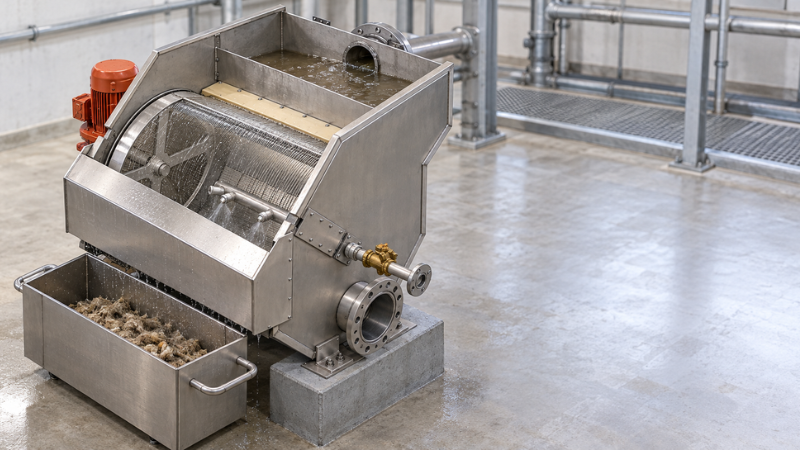
Screening, pH correction, and primary clarification often happen here too. These early steps remove debris and create a more stable feed for the rest of the plant.
Step 2: Break colloids and reduce color
Coagulation and flocculation help gather fine particles and some dye molecules into larger solids. Those solids can then be settled or floated out.
This stage is especially useful when color and turbidity are high. It does not solve everything, but it removes a significant part of the visible pollution.
Step 3: Reduce COD biologically
Biological systems work well on biodegradable organics after the wastewater has been conditioned properly. Aerobic and anaerobic units both have a role, depending on the effluent strength and treatment goal.
A biological stage helps lower COD and BOD, which are important indicators of organic pollution. It also prepares the water for more advanced polishing if reuse is the goal.
Step 4: Polish with advanced processes
Advanced oxidation, activated carbon, membrane filtration, and similar polishing steps help remove persistent color, trace organics, and residual contaminants. These units are often the difference between partial treatment and high-quality effluent.
They are especially valuable when the target is reuse. They also support tighter discharge limits and better consistency.
What advanced systems do better
Handle variable wastewater more reliably
Remove color and COD in separate stages
Improve clarity and odor control
Support water reuse targets
Reduce the risk of untreated shock releases
In simple terms, advanced systems work better because they treat the problem in layers. That is the core idea behind effective wastewater treatment in textile plants.
A Practical Treatment Train For Textile Effluent
A typical textile effluent system usually follows a logical sequence. The exact configuration depends on the dye class, water volume, and final discharge standard.
Typical process flow
Collection and equalization
Screening and grit removal
pH adjustment
Coagulation and flocculation
Primary settling or flotation
Biological treatment
Advanced oxidation or membrane polishing
Final filtration and discharge or reuse
This flow is not random. It is designed to remove pollutants in the order that makes treatment most efficient.
Why sequencing matters
If the wastewater reaches the biological stage too early, the system may struggle. High color, salt, and toxic compounds can suppress microbial activity.
If advanced polishing comes too soon, operating cost rises without solving the real problem. Good sequencing keeps the process balanced, stable, and easier to control.
Conclusion
Textile effluent is challenging because it combines color, salts, variable chemistry, and hard-to-degrade organics in one stream. The answer is not a single treatment step, but a layered approach that matches the wastewater profile and the discharge goal.
A strong wastewater treatment strategy looks at the full chain, from equalization to polishing. That is also why smart wastewater and water management matters: it reduces pollution, stabilizes operations, and improves the quality of every liter leaving the plant.
Frequently Asked Questions (FAQs)
Q1. What pollutants are commonly present in textile wastewater?
A: Textile wastewater often contains dyes, salts, surfactants, sizing agents, and high COD. It may also carry pH fluctuations and trace metals depending on the process and chemicals used.
Q2. Why is color removal difficult in textile effluent?
A: Color removal is difficult because many dyes are chemically stable and designed to remain fixed on fabric. Some may be reduced partially by biological treatment, but visible color can still remain unless advanced processes are used.
Q3. How do advanced treatment systems improve effluent quality?
A: Advanced systems improve effluent quality by combining physical, chemical, biological, and polishing steps. This layered approach removes suspended solids, lowers COD, and targets persistent color and trace contaminants more effectively.
Q4. Can biological treatment alone solve textile wastewater problems?
A: Biological treatment helps reduce biodegradable organics, but it usually cannot fully solve dye color and resistant chemical issues. Textile wastewater often needs pre-treatment and tertiary polishing for stable results.
Q5. What is the most important factor in textile wastewater treatment?
A: The most important factor is matching the treatment train to the actual wastewater profile. Flow variation, dye type, salt concentration, and discharge standards all affect the final treatment design.