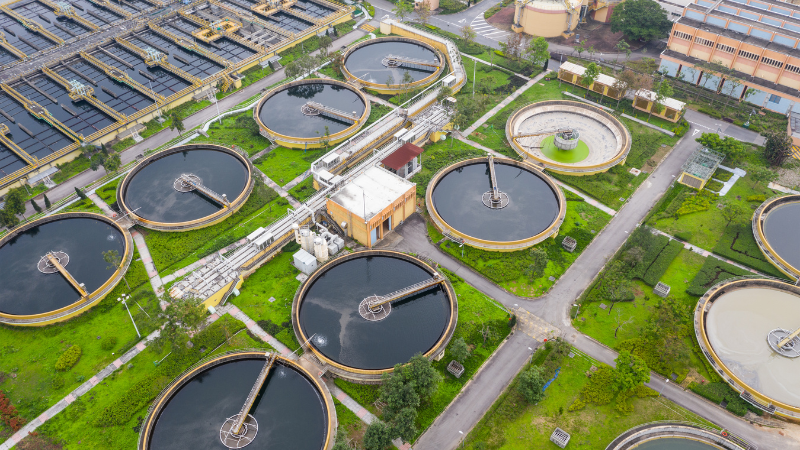
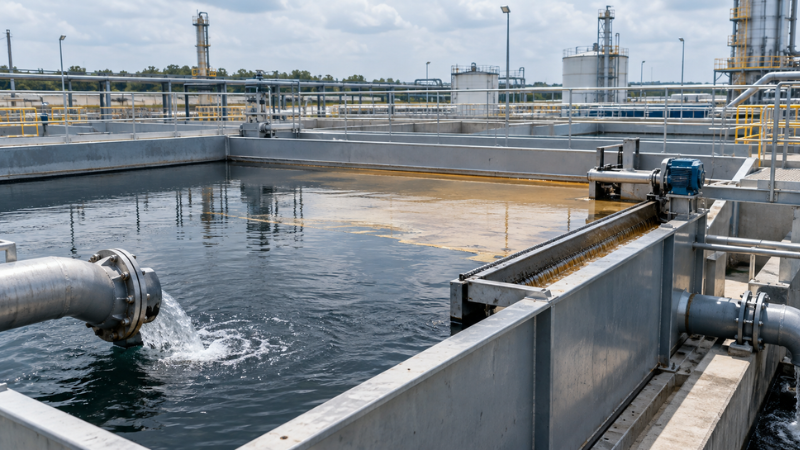
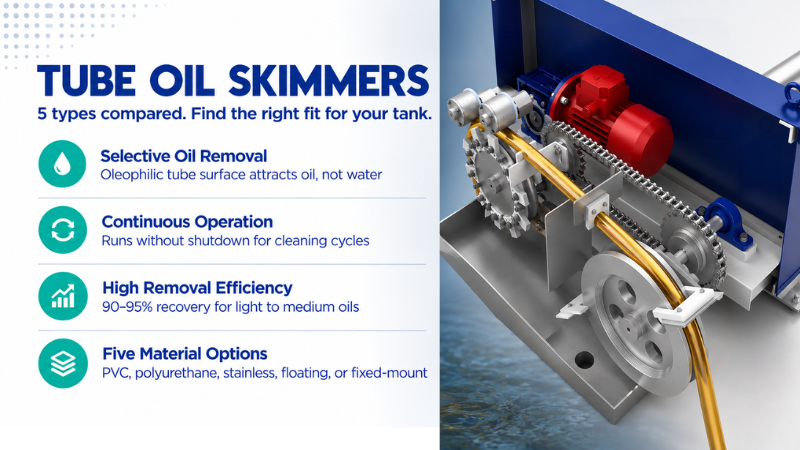
Water pollution in manufacturing plants happens when process water carries oils, chemicals, solids, heat, or metals out of production areas. The main causes are pollutant generation, poor process control, and weak wastewater segregation. This guide explains the common sources, how production steps contaminate water, and why compliance gets difficult.
What does water pollution in manufacturing plants look like?
Water pollution in manufacturing plants usually shows up as changes in color, odor, pH, temperature, or suspended solids. In many cases, the water also carries dissolved pollutants that are invisible but still harmful.
A plant may see oily sheens, foaming, sludge, metal traces, or high-chemical oxygen demand in wastewater. These signs often point to a mix of routine production losses, cleaning waste, and accidental leaks.
What are the most common industrial pollutants and their sources?
Manufacturing wastewater can contain many different pollutants at the same time. The exact mix depends on the product, the raw materials, and the cleaning methods used on site.
Which pollutants are most common in industrial wastewater?
The most common pollutants are easy to list, but harder to control once they enter the drain.
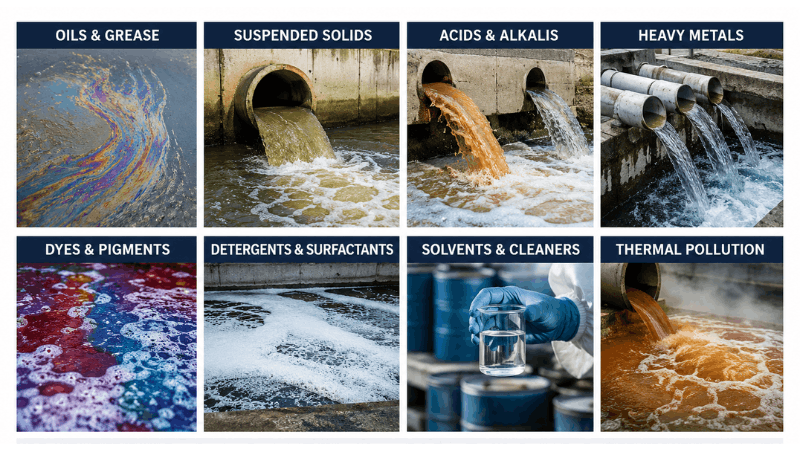
Oils and grease from machinery, lubricants, and hydraulic systems
Suspended solids from cutting, grinding, washing, and material handling
Acids and alkalis from surface preparation, etching, and cleaning
Heavy metals from plating, metal finishing, and equipment wear
Dyes, pigments, and colorants from textile and coating operations
Detergents and surfactants from floor cleaning and equipment washdown
Solvents and cleaners from degreasing and maintenance work
Where do these pollutants usually come from?
Most pollutants do not appear by accident. They enter wastewater because production systems use water as a transport medium, a cleaning agent, or a cooling medium.
Raw material storage, equipment washing, batch dumping, and floor drainage are common entry points. In many plants, even small leaks add up fast because water keeps moving the contamination across the site.
How do production processes contaminate water?
Production processes contaminate water when materials dissolve, wash off, spill, or get carried away during cleaning and transfer. The contamination may be steady and predictable, or it may arrive in sudden shock loads.
The biggest issue is that water often touches more than one process zone before it reaches treatment. That makes the wastewater stream more complex and harder to stabilize.
Which operations create the highest risk?
Some operations are much more likely to create polluted wastewater than others.
Cleaning in place systems that remove residues from pipes and tanks
Rinsing steps that wash chemicals off product surfaces
Cooling systems that pick up heat and treatment chemicals
Surface finishing operations such as plating, painting, and coating
Mixing and batching areas where spillage and washdown are common
Maintenance zones where oils, grease, and solvents are handled
Why is mixing clean and dirty water such a problem?
Mixing clean and dirty water increases the treatment load without improving the outcome. Once relatively clean water is combined with contaminated water, the full flow often needs more treatment, more monitoring, and more energy.
This is why source segregation matters so much. Segregating high-strength streams from low-strength streams can reduce operating stress and improve the performance of industrial wastewater treatment.
Why does stormwater and drainage make the problem worse?
Stormwater becomes polluted when it flows across loading bays, storage yards, chemical areas, or waste handling zones. Rainwater can pick up dust, oil, fine solids, and spilled materials before reaching drains.
Open drains and poorly designed yard slopes can spread contamination across the site. A single storm event can move pollutants from one area into several discharge points, which makes the water quality harder to control.
What regulatory compliance challenges do manufacturers face?
Regulatory compliance is difficult because wastewater quality changes by shift, batch, season, and production volume. A plant may meet limits one day and fail the next if the influent changes too quickly.
Compliance also depends on recordkeeping, sampling, permit conditions, and consistent treatment performance. Even a well-designed system can struggle if the plant sends variable or highly concentrated wastewater into it.
Why do compliance problems happen even when treatment exists?
Treatment systems are not magic shields. They work best when the incoming wastewater is predictable, balanced, and properly segregated.
Common reasons for non-compliance include:
Sudden shock loads from batch dumps
Poor pH control from acidic or alkaline streams
Incomplete removal of oils, solids, or metals
Equipment downtime or weak preventive maintenance
Inadequate operator monitoring and response
Cross-connection between process drains and storm drains
These issues often create unstable discharge quality and higher risk during audits or inspections. That is why process control matters as much as the treatment unit itself.
How can manufacturers reduce pollution at the source?
Source control is the easiest way to reduce wastewater pollution before treatment begins. The goal is to keep pollutants out of water instead of trying to remove everything later.
A practical pollution prevention strategy usually includes:
Segregate high-strength streams from low-strength streams.
Recover oils, solids, and reusable chemicals before wash water reaches drains.
Replace harsh cleaners or toxic inputs with safer alternatives where possible.
Improve housekeeping, leak detection, and spill response.
Use closed-loop rinsing, counter-current washing, or water reuse where feasible.
Maintain pumps, valves, tanks, and seals to prevent chronic losses.
Monitor wastewater regularly so changes are caught early.
Good source control also supports water recycling and reduces pressure on wastewater treatment systems.
Why does pollution prevention matter more than end-of-pipe fixes?
Pollution prevention matters because treatment gets more expensive as contamination gets more complex. When a plant reduces pollutant load at the source, the system downstream becomes easier to run, easier to monitor, and less vulnerable to spikes.
It also improves reliability. A plant with cleaner, more consistent wastewater can usually achieve better results with less chemical use, less sludge generation, and fewer compliance surprises.
Conclusion
Water pollution in manufacturing plants usually starts with routine operations, not dramatic accidents. The main causes are industrial pollutants from raw materials and equipment, contamination during cleaning and processing, and weak segregation between clean and dirty water streams. Regulatory compliance becomes harder when wastewater quality changes from batch to batch or shift to shift. The clearest lessons are simple: identify pollution sources early, control high-strength streams, and reduce contamination before treatment begins. For many facilities, better source control is the foundation of industrial wastewater treatment, water recycling, and long-term wastewater stability.
Frequently Asked Questions (FAQs)
Q1. What is the biggest cause of water pollution in manufacturing plants?
A: The biggest cause is usually process water picking up contaminants during production, cleaning, or material handling. Oils, solids, chemicals, and metals often enter wastewater long before the water reaches treatment.
Q2. How do industrial pollutants enter wastewater?
A: Industrial pollutants enter wastewater through rinsing, washdown, leaks, spills, batch discharge, and open drains. In many factories, the same water system carries both production residues and cleaning waste.
Q3. Why is compliance difficult for manufacturing wastewater?
A: Compliance is difficult because wastewater composition changes with production volume, raw materials, and cleaning cycles. A treatment system may perform well during steady operation but fail during shock loads or maintenance problems.
Q4. Can pollution be reduced before treatment?
A: Yes, pollution can be reduced at the source through segregation, spill control, leak prevention, cleaner production methods, and water reuse. Source reduction usually makes downstream treatment more stable and less costly.