Chemical water pollution is a daily operating problem in mining, chemical manufacturing, power, oil and gas, steel, food and beverage, and marine operations, where process water carries oils, solvents, metals and solids. The chemistry differs from one plant to the next. The physical contaminants riding along with it are surprisingly similar.
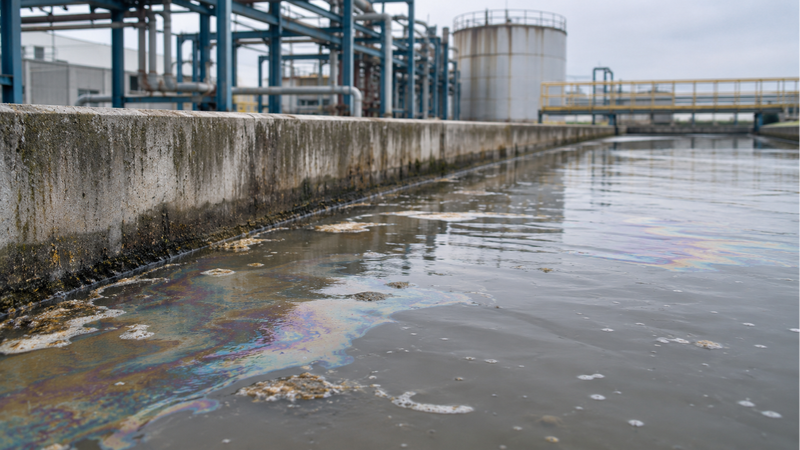
In every one of these seven industries, free and emulsified oil, grease and suspended solids travel with the dissolved chemical load. India’s general discharge standards under the Environment (Protection) Rules, 1986 cap oil and grease at 10 mg/L for inland surface water, so a small amount of free oil can decide whether a plant is compliant. And because oil films and sludge foul the chemical and biological treatment stages downstream, pulling them out early makes the rest of the plant easier to run.
The practical takeaway is that the contamination source matters more than the sector label. A steel mill and a dairy both produce oily wastewater, but the oil, the temperature and the solids are completely different, and so is the right removal method. The sections below go industry by industry.
1. Why does the mining sector struggle with water contamination?
Mining contamination comes from two directions: dissolved metals and acidity from the ore body, and hydrocarbons and solids from the equipment that works it. The first gets most of the attention. The second is often easier to control and is frequently left until a sample fails.
Haul trucks, excavators and crushers are serviced on site. Workshop floor drains, vehicle wash bays and fuel and lubricant storage areas all produce oily runoff. In the monsoon, that runoff mixes with stormwater carrying fine solids and lands in the same settling ponds as process water.
The oil causes two problems. It floats as a film that carries straight past a pond outlet, and it coats fine solids so they settle poorly. A pond sized for clean silt ends up holding an oily sludge layer that is hard to dewater.
The controls that work are physical and placed close to the source:
• interceptors or oil–water separators on workshop and wash bay drains
• oil skimmers on settling ponds where a surface film forms
• sludge removal on a fixed schedule rather than when the pond is full
None of these treat acid mine drainage or dissolved metals. They keep the oily fraction out of the systems that do.
2. What causes chemical manufacturing discharge problems?
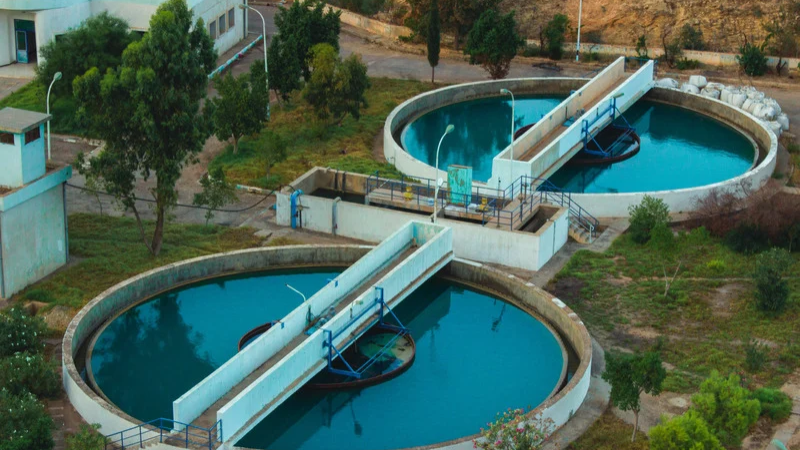
Chemical manufacturing discharge problems usually start with variability. Batch processes change the effluent’s composition, pH and temperature from one shift to the next, and an effluent treatment plant (ETP) designed for an average stream struggles with the peaks.
Oil and organic phases make the peaks worse. Process oils, lubricants from pumps and compressors, and solvents lighter than water separate into a floating layer. Detergents from equipment washdown then turn part of that layer into a stable emulsion that gravity alone won’t break.
Many plants in industrial estates discharge into a common effluent treatment plant (CETP), which sets its own inlet limits. Maharashtra’s CETP guidelines cap oil and grease at the inlet:
CETP inlet limit for oil and grease (MPCB): 20 mg/L
A single slug of free oil from a batch washdown can breach that inlet limit even when the plant’s average effluent sits well inside it.
The usual sequence is to separate free oil and floating solvent first, then break emulsions chemically, then neutralise. Each step works better when the one before it has done its job. Solvents denser than water behave differently. They sink, so surface skimming won’t catch them, and the separator design has to allow for a bottom draw-off.
3. What are the main power plant cooling water concerns?
Power plant cooling water concerns fall into three groups: the chemicals dosed into the circuit, the heat carried out of it, and the debris and oil that get into it. Cooling tower blowdown carries biocides, scale inhibitors and concentrated dissolved solids. Once-through systems return large volumes of warmer water, and the general discharge standard limits that temperature rise:
Temperature limit for discharge to inland surface water: not more than 5 °C above the receiving water
The physical side is the part an operations team controls most directly. Intake water brings in leaves, plastics and aquatic growth that block condenser tubes unless mechanical screens catch them first. Inside the plant, turbine lube oil systems, boiler feed pumps and transformer yards are all sources of oil that can reach drains and, through leaking coolers, the cooling circuit itself.
An oil film in a cooling tower basin traps dirt and feeds biological growth, which raises biocide demand. Oil in station drainage ends up in the plant’s oily water system and, if that system is undersized, in the outfall.
The controls follow the sources:
• screening at the intake to protect condensers
• oil skimmers on cooling tower basins and drainage sumps
• oil–water separators on transformer yard and turbine hall drains
• scheduled desludging of cooling tower basins
4. Why is refinery effluent so hard to keep within limits?
Refinery effluent is held to a tighter oil and grease limit than general industry, and the plant has more oil sources feeding its drains. Under the Environment (Protection) Amendment Rules, 2008, the petroleum oil refinery standard sets:
Oil and grease in treated refinery effluent: 5.0 mg/L
Oil and grease in once-through seawater cooling effluent: 1.0 mg/L
That is half the general inland surface water limit, applied to a site where almost every drain can carry hydrocarbon. Water drawn off the bottom of crude and product storage tanks, desalter brine, process unit drains and stormwater from tank farms all reach the oily water sewer. Desalter brine is a frequent source of emulsified oil, because it leaves the unit after mixing with crude under shear.
Storage tanks add a second burden. Sludge builds up on tank floors over years of service, and when a tank comes down for inspection, that sludge and its wash water have to go somewhere. Handled carelessly, a single tank cleaning can send a sludge and oil load to the effluent plant that it was never sized for.
Holding 5 mg/L consistently means treating oil removal as a series of stages, each sized for what the previous one lets through:
1. free oil recovery in gravity oil–water separators
2. skimming of slop oil from separator and equalisation tank surfaces
3. chemical emulsion breaking for the oil that stays dispersed
4. controlled, contained tank cleaning so sludge never reaches the sewer
5. How does oily mill scale affect steel plant wastewater?
Steel plant wastewater is dominated by the direct cooling water from hot rolling, which picks up mill scale and oil in the same pass. Water sprayed on the strip and the rolls knocks off iron oxide scale and washes off rolling lubricants, bearing grease and hydraulic oil that leak from the mill stands.
That mixture drains to a scale pit. Gravity does part of the work. Heavy scale settles to the floor, and free oil rises to the surface. The trouble is that some oil coats the finer scale particles, so the sludge at the bottom of the pit is oily and the water in the middle carries fine, oil-wetted solids.
Scale pits fail in predictable ways:
• surface oil builds up faster than it is removed and carries over to the cooling tower or the outfall
• scale fills the pit and cuts the settling time, so more solids pass through
• hand desludging is postponed because it means stopping and entering the pit
• emulsified oil from coolant and hydraulic leaks escapes both settling and skimming
Continuous oil skimming on the pit surface and mechanical scraping of settled scale keep the pit doing its job between shutdowns. The recovered scale is also cleaner and easier to reuse when the oil has been taken off first.
6. Why do fats, oils and grease cause trouble in food and beverage plants?
Food and beverage plants deal with fats, oils and grease (FOG) that change behaviour with temperature. Edible oil processing, dairies, meat and snack production all discharge FOG, and much of it leaves the process hot and liquid.
That temperature is the problem. Hot FOG passes through drains as a liquid, then cools in the sump or the equalisation tank and turns into a solid or semi-solid layer. Animal fats and dairy fat do this at higher temperatures than vegetable oils. A grease layer that wasn’t there at the outlet appears a few metres downstream.
FOG causes trouble at almost every stage of an effluent plant:
• it blinds screens and coats pump impellers
• it forms a floating scum mat in equalisation and settling tanks
• it coats biological floc and starves an aerobic process of oxygen
• it pushes oil and grease at the outlet above the 10 mg/L general limit
Cleaning-in-place (CIP) chemicals add a twist. Caustic and detergent washes emulsify FOG and raise the pH, so the same drain can carry free grease one hour and an emulsion the next.
The working sequence is to screen out food solids first, remove free FOG while it is still floating, and take scum off settling tanks with mechanical scrapers instead of by hand. Skimmer selection has to match the FOG at the point it is removed, liquid or congealed, which is why the sampling point matters as much as the equipment.
7. What makes bilge and oily water a compliance risk in marine operations?
Marine oily water is regulated internationally under MARPOL Annex I, and the limit is enforced by an automatic monitor on the discharge line. Machinery space bilge water collects oil that leaks and drips from engines, purifiers, pumps and stern tube seals, mixed with condensate, washwater and seawater.
A ship may discharge processed bilge water only while under way, through approved oil filtering equipment, and only when the undiluted effluent meets the limit:
Maximum oil content of discharged machinery space bilge water (MARPOL Annex I): 15 ppm
On ships of 400 gross tonnage and above, an oil content monitor sounds an alarm and stops the discharge automatically when that figure is exceeded. Every operation is recorded in the Oil Record Book.
The practical difficulty is emulsions. Bilge water that contains detergents, degreasers or finely sheared oil from a pump can hold oil in suspension that a gravity separator will not release. The monitor then trips repeatedly, the separator is blamed, and bilge water accumulates on board.
What cannot be discharged at sea goes ashore. Port reception facilities, shipyards and harbour operators then handle the same bilge water, sludge and slop oil on land. In India, their treated water then falls under the general discharge standard for marine coastal areas:
Oil and grease limit for discharge to marine coastal areas: 20 mg/L
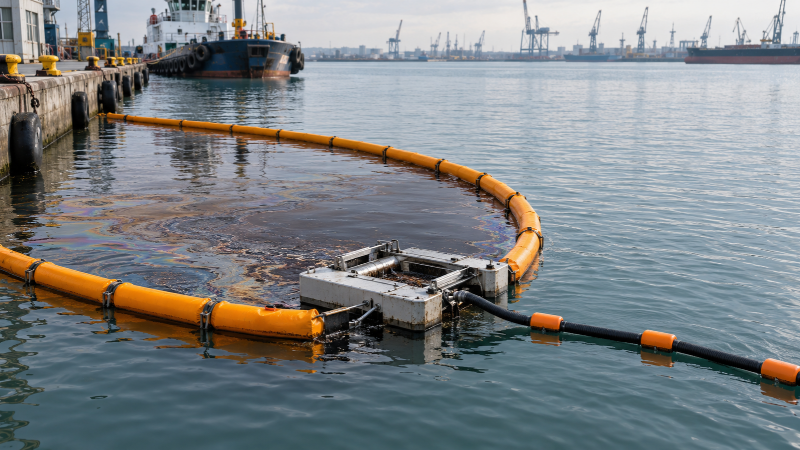
Harbour basins also keep oil spill response equipment on standby, because bunkering and cargo transfers both carry a spill risk at the quayside.
Conclusion
Chemical water pollution looks different in every one of these seven industries, but the same physical contaminants keep turning up alongside the chemistry. Mining runoff, chemical plant washdown, power station drains, refinery sewers, steel mill scale pits, food plant FOG and ship bilges all carry free or emulsified oil and settleable solids.
Three points carry across sectors. Oil and grease limits are tight, from 15 ppm for bilge water at sea to 5 mg/L for refinery effluent and 10 mg/L for general inland discharge. Removing free oil and solids close to the source protects every treatment stage downstream. And the right removal method depends on the stream itself, its temperature, emulsion content and solids load, more than on the industry name.
FAQs
Q1. Which industries are most affected by chemical water pollution?
A: Mining, chemical manufacturing, power generation, oil and gas refining, steel, food and beverage, and marine operations all face persistent chemical water pollution. In each of them, oil, grease and suspended solids travel with the dissolved chemical load and are often the parameters that decide compliance.
Q2. What is the oil and grease discharge limit in India?
A: Under the general standards in Schedule VI of the Environment (Protection) Rules, 1986, oil and grease is limited to 10 mg/L for inland surface water and 20 mg/L for public sewers and marine coastal areas. Some industries have tighter sector-specific limits, such as 5.0 mg/L for petroleum oil refinery effluent.
Q3. Why does oil in wastewater cause problems for effluent treatment plants?
A: Free oil forms surface films and scum mats, coats suspended solids so they settle poorly, and fouls screens and pumps. In biological treatment, oil and grease coat the floc and reduce oxygen transfer, so removing free oil early protects every downstream stage.
Q4. What is the oil content limit for ship bilge water discharge?
A: MARPOL Annex I allows processed machinery space bilge water to be discharged only while the ship is under way, through approved oil filtering equipment, with an undiluted oil content of no more than 15 ppm. Ships of 400 gross tonnage and above must have a monitor that stops the discharge automatically above that level.
Q5. Why do emulsions make oily water harder to treat?
A: In an emulsion, oil is dispersed as fine droplets that stay suspended instead of rising to the surface. Detergents, cleaning chemicals and high-shear pumping create emulsions, and gravity separation and surface skimming cannot remove that fraction without an emulsion-breaking step.
Q6. How is oily scale removed from steel mill scale pits?
A: Scale pits rely on gravity, with heavy mill scale settling to the floor and free oil rising to the surface. Continuous oil skimming removes the surface layer, and mechanical scraping of settled scale avoids the shutdowns and confined-space entry that manual desludging requires.