Tank cleaning robot technology helps industries clean storage tanks more safely, efficiently, and consistently by reducing confined space entry, minimizing downtime, and improving cleaning quality. Industries handling hazardous, corrosive, or difficult-to-remove materials gain the greatest benefits from robotic tank cleaning systems.
Many industrial facilities rely on tanks for storing liquids, chemicals, fuels, or process materials. Over time, sludge, sediment, scale, and other residues accumulate inside these tanks, reducing storage capacity and affecting operational efficiency. Traditional cleaning methods often require workers to enter confined spaces, increasing safety risks and extending maintenance schedules. Modern robotic solutions are changing how industries approach industrial tank cleaning by improving safety while maintaining high cleaning standards.
What Is a Tank Cleaning Robot?
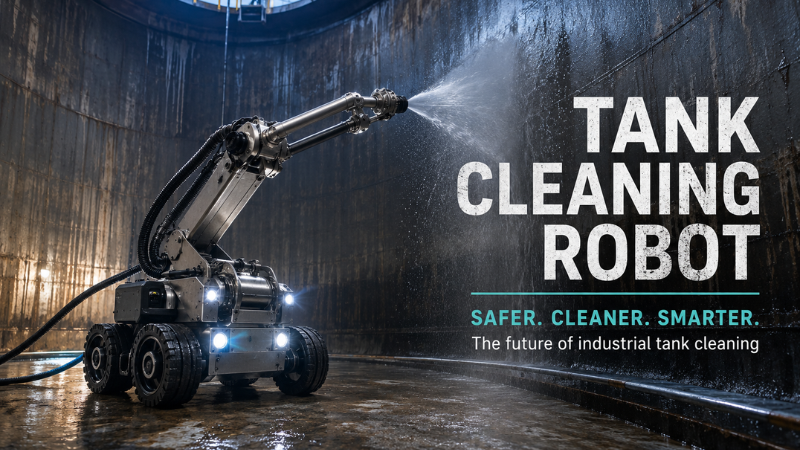
A tank cleaning robot is a remotely operated or automated machine designed to clean the interior surfaces of industrial storage tanks without requiring personnel to enter the tank. These robots use high-pressure water jets, rotating nozzles, vacuum systems, or mechanical cleaning tools depending on the application.
Unlike conventional manual cleaning, robotic tank cleaning allows operators to control the equipment from outside the confined space. This significantly reduces worker exposure to hazardous environments while improving cleaning consistency.
Common capabilities include:
High-pressure surface cleaning
Sludge and sediment removal
Internal wall washing
Floor cleaning
Remote inspection during cleaning
Operation in hazardous environments
Why Are Tank Cleaning Robots Becoming More Popular?
Growing workplace safety regulations and increasing operational costs have encouraged industries to adopt automation wherever possible. Storage tank maintenance is one area where robotics delivers measurable improvements.
Some of the key advantages include:
Reduced confined space entry
Improved worker safety
Faster cleaning cycles
More consistent cleaning quality
Reduced operational downtime
Lower water and chemical consumption in many applications
For facilities with multiple tanks or scheduled maintenance shutdowns, robotic cleaning systems can also help standardize cleaning procedures across different sites.
Which Industries Benefit Most From Tank Cleaning Robots?
Different industries face different tank cleaning challenges. However, sectors that store hazardous, sticky, or valuable materials generally see the greatest return from robotic cleaning technologies.
Oil and Gas Industry
The oil and gas industry operates thousands of storage tanks containing crude oil, refined petroleum products, lubricants, and wastewater. Over time, heavy sludge, wax, and sediment settle at the bottom of these tanks.
Storage tank maintenance is critical because excessive sludge reduces usable storage capacity and complicates inspections.
Typical applications include:
Crude oil storage tanks
Diesel storage tanks
Fuel terminals
Refinery process tanks
Produced water tanks
Robotic systems help remove accumulated deposits while reducing worker exposure to hydrocarbon vapors and confined spaces.
Typical operational benefits may include:
Reduced maintenance downtime
Improved worker safety
Better sludge removal consistency
Chemical Manufacturing Industry
Chemical plants frequently store corrosive, toxic, or reactive materials that require specialized cleaning procedures. Manual cleaning can expose workers to chemical hazards, even after tanks are isolated.
Robotic tank cleaning minimizes direct human exposure by allowing cleaning operations to be controlled remotely.
Common chemical industry applications include:
Acid storage tanks
Solvent tanks
Resin storage vessels
Polymer processing tanks
Mixing vessels
Because different chemicals require different cleaning methods, robotic equipment can often be adapted with specialized nozzles or cleaning attachments.
Marine Shipping Industry
Marine vessels contain numerous tanks that require regular cleaning throughout their service life. Cargo tanks, ballast tanks, fuel tanks, and slop tanks all accumulate residues that must be removed before inspections, maintenance, or cargo changes.
Robotic cleaning helps improve consistency while reducing the need for workers to enter confined shipboard tanks.
Typical marine applications include:
Cargo tanks
Ballast tanks
Fuel oil tanks
Slop tanks
Chemical carrier tanks
For vessels transporting different cargoes, efficient cleaning also helps reduce cross-contamination between shipments.
Food and Beverage Industry
Food manufacturers depend on hygienic processing environments. Tanks used for milk, beverages, edible oils, syrups, and liquid ingredients require frequent cleaning to maintain product quality.
Many facilities already use automated Clean-in-Place (CIP) systems. However, larger storage tanks or tanks with heavy product buildup may benefit from robotic cleaning technologies during scheduled maintenance.
Common applications include:
Robotic cleaning helps improve consistency while supporting food safety programs.
Water and Wastewater Industry
Municipal and industrial water treatment facilities operate numerous tanks used for sedimentation, sludge handling, chemical storage, and wastewater processing.
These tanks often accumulate biological growth, sludge, grit, and mineral deposits that require periodic removal.
Typical applications include:
Robotic cleaning reduces manual labor while supporting regular maintenance schedules that help maintain treatment efficiency.
How Does a Tank Cleaning Robot Improve Safety?
Safety is one of the strongest reasons industries invest in robotic tank cleaning.
Traditional confined space tank cleaning may expose workers to:
By allowing cleaning operations to be performed remotely, robotic systems significantly reduce the amount of time personnel spend inside hazardous environments.
Although confined space procedures remain necessary for inspections or maintenance, reducing human entry lowers overall operational risk.
How Does Robotic Tank Cleaning Improve Efficiency?
Beyond safety, robotic systems improve maintenance efficiency by making cleaning operations more predictable and repeatable.
Operational improvements may include:
Shorter cleaning preparation time
Faster sludge removal
Better cleaning coverage
Reduced equipment downtime
Improved inspection readiness
More repeatable maintenance processes
The exact improvements depend on tank size, residue type, cleaning technology, and maintenance planning.
What Should Industries Consider Before Selecting a Tank Cleaning Robot?
Not every robotic system is suitable for every application. Selecting the appropriate equipment requires evaluating both operational requirements and safety considerations.
Important selection factors include:
Matching the robot to the application helps maximize cleaning performance while minimizing maintenance costs.
Conclusion
A tank cleaning robot has become an important maintenance tool for industries that rely on large storage and process tanks. Oil and gas facilities, chemical manufacturers, marine operators, food processors, and water treatment plants all face unique cleaning challenges that can often be addressed through robotic tank cleaning. By reducing confined space entry, improving cleaning consistency, supporting storage tank maintenance, and enhancing workplace safety, these systems are reshaping industrial tank cleaning practices. As industrial automation continues to advance, robotic cleaning technologies are expected to play an increasingly important role in maintaining safer, more efficient, and more reliable operations across a wide range of industries.
FAQs
Q1. What is a tank cleaning robot?
A: A tank cleaning robot is a remotely operated machine designed to clean industrial storage tanks without requiring personnel to enter confined spaces. Robotic tank cleaning improves worker safety while delivering consistent cleaning performance.
Q2. Which industries use robotic tank cleaning most often?
A: Industries including oil and gas, chemical manufacturing, marine shipping, food processing, and water treatment commonly use robotic tank cleaning because they operate large storage tanks that require regular maintenance.
Q3. How does a tank cleaning robot improve workplace safety?
A: A tank cleaning robot reduces the need for confined space entry by allowing operators to control cleaning equipment remotely. This minimizes worker exposure to hazardous gases, chemicals, and other confined-space risks.
Q4. Can robotic tank cleaning reduce maintenance downtime?
A: Yes. Industrial tank cleaning robots can often shorten cleaning cycles, improve cleaning consistency, and prepare tanks for inspection more efficiently than traditional manual cleaning methods, depending on the application.
Q5. What types of tanks can a tank cleaning robot clean?
A: A tank cleaning robot can be used for crude oil tanks, chemical storage tanks, ballast tanks, wastewater tanks, food processing tanks, and many other industrial storage vessels, provided the equipment matches the application requirements.