A manual bar screen is a coarse screening device that removes large solids from wastewater before the flow reaches pumps, treatment units, or downstream equipment. Manual bar screens protect equipment, reduce blockages, and provide a simple first stage of wastewater screening.
Unlike automated screening systems, manual screens rely on operators to remove accumulated debris. This makes them particularly useful where wastewater flows are moderate, debris loads are manageable, or a simple and robust screening arrangement is preferred.
A typical screening system separates materials such as plastics, rags, sticks, packaging, paper, and other large debris from incoming wastewater. Understanding the working principle, components, and applications of manual bar screens helps explain why coarse screening remains an important part of many treatment systems.
What Is a Manual Bar Screen?
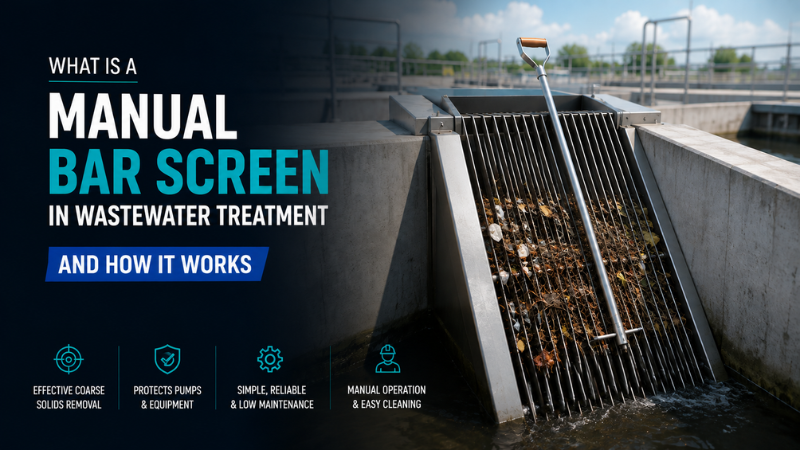
A manual bar screen is a fixed screen made of parallel metal bars installed across a wastewater channel or inlet. The spacing between the bars determines the approximate size of solids that can pass through the screen.
Wastewater flows through the openings between the bars while larger solids are retained on the upstream face. An operator periodically removes the accumulated material using a rake, hook, or other suitable manual cleaning tool.
Manual screening equipment is generally designed around three basic functions:
Allowing wastewater to pass through the screen openings.
Retaining oversized solids before downstream treatment.
Allowing operators to remove accumulated screenings safely.
The screen is usually installed at the beginning of a treatment process because large debris can interfere with pumps, valves, pipelines, and other treatment equipment.
How Does a Manual Bar Screen Work?
The working principle of a manual bar screen is based on physical separation. Wastewater passes through parallel bars while solids larger than the available openings are retained.
The screening process generally follows a simple sequence:
Wastewater enters the screening channel. Incoming flow carries suspended and floating debris toward the screen.
Large solids encounter the bars. Materials larger than the clear spacing between bars are retained.
Liquid passes through the openings. Wastewater continues downstream after passing through the screen.
Screenings accumulate on the upstream side. Captured debris gradually forms a layer against the bars.
An operator removes the screenings. Accumulated material is manually raked or lifted away from the screen.
The screen is returned to service. Regular cleaning keeps the openings available for wastewater flow.
The frequency of manual cleaning depends on the wastewater characteristics, screen dimensions, bar spacing, and quantity of incoming debris. A heavily loaded screen requires more frequent cleaning than a screen receiving relatively low concentrations of coarse solids.
What Happens If a Manual Bar Screen Is Not Cleaned?
A manual bar screen can create increasing flow resistance when retained debris is allowed to accumulate excessively. The buildup can reduce the effective open area and increase the upstream water level.
Regular inspection is therefore important. Operators typically monitor the amount of accumulated material and clean the screen before excessive blockage affects hydraulic performance.
What Are the Key Components of a Manual Bar Screen?
A manual bar screen consists of several basic structural and screening elements. The exact configuration varies according to channel dimensions, wastewater characteristics, required screening size, and installation conditions.
The main components commonly include:
Screen bars: Parallel bars form the screening surface and retain oversized solids.
Frame: The supporting structure holds the bars in their designed position.
Bar spacers: Spacing elements maintain consistent openings between adjacent bars.
Mounting supports: Structural members secure the screen within the wastewater channel.
Manual cleaning tool: A rake or similar tool is used to remove accumulated screenings.
Access arrangement: A platform, walkway, or suitable operating area allows personnel to inspect and clean the screen.
The screen must be structurally strong enough to withstand hydraulic forces and the physical loads created by accumulated debris.
How Does Bar Spacing Affect Screening?
Bar spacing is one of the most important design parameters because it determines which coarse solids are retained and which materials pass through the screen.
A smaller opening captures smaller solids but can also increase the frequency of cleaning and the risk of blockage. A larger opening allows more material to pass downstream while reducing the amount of debris retained.
The appropriate spacing therefore depends on the treatment objective and the equipment or process that follows the screen.
What Design Features Matter in Manual Screening?
A practical manual bar screen needs to balance screening performance, hydraulic flow, structural strength, and operator access.
Important design considerations include:
Clear bar spacing: Determines the approximate size of solids retained.
Screen inclination: Influences how easily operators can remove accumulated material.
Channel dimensions: Must accommodate the expected wastewater flow.
Material selection: Should suit the wastewater environment and expected corrosion conditions.
Operating access: Should allow safe inspection and manual cleaning.
Hydraulic conditions: Should minimize unnecessary head loss while maintaining effective screening.
Debris characteristics: The type, size, shape, and quantity of solids affect cleaning requirements.
A properly designed manual bar screen should allow wastewater to pass without excessive restriction while retaining the targeted coarse material.
Why Is Coarse Screening Important in Wastewater Treatment?
Coarse screening is important because large debris can cause mechanical and operational problems downstream. Removing these materials at the inlet reduces the likelihood of blockages and protects equipment from physical interference.
Wastewater entering a treatment facility can contain materials that were not intended to enter the treatment process. Examples include rags, plastics, wood pieces, packaging materials, and other large debris.
Manual bar screens can therefore serve as a protective barrier before processes such as pumping, grit removal, biological treatment, or other downstream operations.
The main functions of coarse screening include:
Protecting pumps from large debris.
Reducing blockage risks in pipelines and channels.
Preventing large solids from entering downstream treatment units.
Reducing mechanical interference within treatment equipment.
Improving the reliability of subsequent treatment stages.
Screening does not replace biological, chemical, or physical treatment processes. Its primary purpose is to remove larger materials that can interfere with subsequent wastewater treatment operations.
What Are the Advantages of a Manual Bar Screen?
Manual bar screens are valued for their relatively simple construction and straightforward operating principle. Because the screening action does not require an automated mechanical cleaning mechanism, the arrangement can be suitable for certain wastewater facilities with manageable screening loads.
Key advantages include:
Simple operation: Operators can inspect and clean the screen using basic manual procedures.
Straightforward construction: The system consists primarily of structural supports and parallel screening bars.
Low mechanical complexity: Fewer moving parts can simplify maintenance requirements.
Effective coarse screening: Large solids can be intercepted before reaching downstream equipment.
Flexible installation: Manual screens can be configured for different channel and inlet arrangements.
Useful for moderate debris loads: Manual cleaning can be practical where screenings do not accumulate rapidly.
However, manual operation also creates a direct dependence on regular inspection and cleaning. Facilities with high debris loads or continuous heavy screening requirements may need a mechanically cleaned or automated screening arrangement instead.
Which Industries Benefit From Manual Screening?
Manual bar screens can be used across wastewater systems where coarse solids need to be intercepted before downstream treatment. The suitability of manual screening depends more on flow conditions, debris loading, and operating practices than on the industry alone.
Several industries can use manual screening as part of their wastewater management systems.
How Are Manual Bar Screens Used in Municipal Wastewater Treatment?
Municipal wastewater can contain rags, plastics, sanitary materials, paper, and other coarse debris. A manual bar screen can be positioned at an inlet or preliminary treatment stage to intercept larger solids before they reach pumps and subsequent treatment units.
The screening process helps protect downstream equipment and reduces the amount of large debris entering the treatment process.
How Are Manual Bar Screens Used in Industrial Facilities?
Industrial wastewater streams can contain different types of coarse material depending on the manufacturing process. A manual screen can be used where the wastewater contains identifiable large solids that need to be separated before subsequent treatment.
The exact screening arrangement depends on the process, wastewater characteristics, flow rate, and size distribution of the solids.
How Are Manual Bar Screens Used in Food and Beverage Facilities?
Food and beverage wastewater can contain larger organic materials, packaging fragments, and process-related debris. Preliminary screening can remove larger solids before wastewater enters downstream treatment equipment.
Manual screening can be practical in smaller or moderate-flow applications where the retained material can be removed at manageable intervals.
How Are Manual Bar Screens Used in Other Industrial Applications?
Manual screening can also be relevant to wastewater systems associated with industries such as chemical processing, power generation, mining, and other manufacturing operations.
The correct application depends on the wastewater stream rather than the industry label alone. Engineers typically consider flow rate, solids characteristics, screen opening, hydraulic conditions, and required cleaning frequency when determining whether manual screening is appropriate.
How Should a Manual Bar Screen Be Maintained?
Maintenance of a manual bar screen focuses primarily on inspection, cleaning, structural condition, and unobstructed flow. Because cleaning is performed manually, consistent operating procedures are especially important.
Routine maintenance generally includes:
Inspecting the screen for accumulated screenings.
Removing debris before excessive blockage develops.
Checking bars for bending, damage, or excessive corrosion.
Inspecting the supporting frame and mounting points.
Checking the surrounding channel for accumulated solids.
Maintaining safe access for operators.
Recording recurring debris-loading patterns where useful.
The removed screenings should also be handled and disposed of according to applicable waste-management requirements. Wastewater screenings can contain contaminants and should not be treated as ordinary recyclable material without appropriate assessment.
What Is the Difference Between Manual and Mechanical Bar Screens?
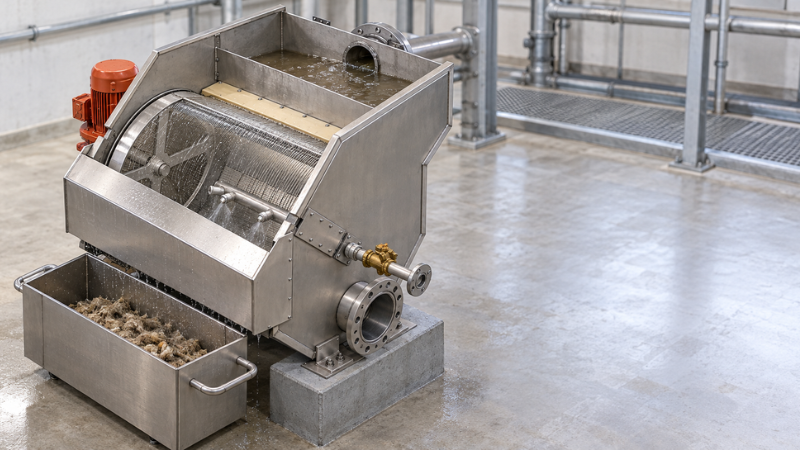
The main difference is the way accumulated screenings are removed. A manual bar screen requires an operator to remove retained solids, while a mechanical screen uses equipment such as rakes, chains, cables, or other mechanisms to automate the cleaning process.
Manual screening may be suitable when debris accumulation is relatively manageable and routine operator access is available. Mechanical screening becomes more useful when continuous operation, higher flow rates, or frequent debris accumulation make manual cleaning impractical.
The choice between the two depends on factors such as:
Wastewater flow rate.
Quantity and type of incoming solids.
Required operating hours.
Available labor and operator access.
Channel configuration.
Required level of screening automation.
Neither approach is universally better. The appropriate screening method depends on the hydraulic and operational requirements of the wastewater treatment system.
Conclusion
A manual bar screen provides a simple method of removing coarse solids from wastewater before those materials reach downstream treatment equipment. The screen works by allowing wastewater to pass between parallel bars while retaining larger debris for periodic manual removal. Bar spacing, screen construction, hydraulic conditions, debris characteristics, and operator access are important design considerations. Manual screening can be useful in municipal and industrial wastewater applications where solids loading is manageable and routine cleaning is practical. Regular inspection and debris removal are essential because excessive accumulation can restrict flow and increase hydraulic resistance. Understanding these principles helps determine where manual screening fits within a broader wastewater treatment process.
FAQs
Q1. What is a manual bar screen in wastewater treatment?
A: A manual bar screen is a coarse screening device that uses parallel bars to retain large solids from wastewater. Operators manually remove the accumulated screenings to protect downstream pumps, pipelines, and treatment equipment.
Q2. How does a manual bar screen work?
A: Wastewater flows through openings between parallel bars while solids larger than the openings are retained. Operators periodically remove the accumulated debris using a rake or other manual cleaning tool.
Q3. What materials can a manual bar screen remove?
A: A manual bar screen can retain coarse materials such as plastics, rags, sticks, packaging, paper, and other large debris. The actual materials removed depend on the wastewater characteristics and the spacing between the screen bars.
Q4. What is the difference between manual and mechanical screening?
A: Manual screening requires operators to remove accumulated solids, while mechanical screening uses an automated cleaning mechanism. Manual screening is generally more appropriate when debris loading and cleaning requirements are manageable.
Q5. Why is coarse screening important in wastewater treatment?
A: Coarse screening removes large debris before the material reaches pumps, pipelines, and downstream treatment units. This helps reduce blockage risks and protects equipment from physical interference caused by oversized solids.
Q6. Which industries use manual bar screens?
A: Manual bar screens can be used in municipal wastewater systems and industrial facilities such as food and beverage, chemical processing, power, mining, and manufacturing operations. Suitability depends on flow rate, debris characteristics, cleaning requirements, and system design.